Removing Hard Water Stains From Bathrooms
White scale on glass and faucets is dissolved minerals, not dirt, so soap will not shift it. Here is what dissolves it, what it damages, and how to stop it returning.
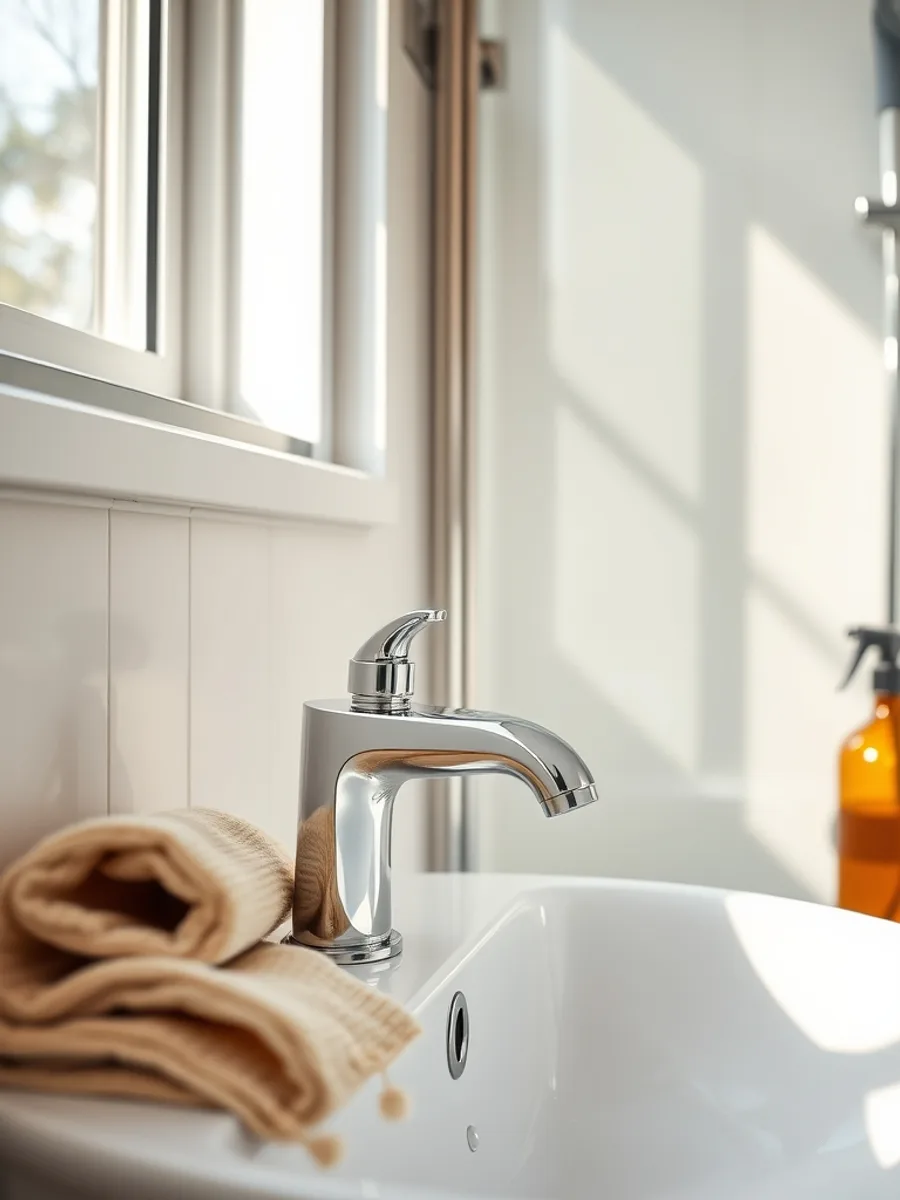
Hard water leaves white marks that look like dirt and behave nothing like it. Scrubbing harder makes them duller, and soap adds a film on top. The deposits are calcium and magnesium salts left behind when water evaporates, and the thing that dissolves them is acid.
This post contains affiliate links. If you buy through them, we may earn a commission at no extra cost to you. Read our Affiliate Disclosure.
What is actually on the surface
Two different problems get called hard water stains. Scale is the chalky white crust on faucets, showerheads, and glass, and it is mineral. Soap scum is the gray, slightly greasy film on tile and tubs, and it is soap that has reacted with the minerals in the water. Scale responds to acid. Soap scum responds to a surfactant and some mechanical work.
Telling them apart
Wet the patch. Scale goes slightly translucent and stays hard. Soap scum softens and feels slick. If a white mark on glass does not respond to acid at all, it may be etched rather than coated, which is damage rather than deposit and needs polishing rather than cleaning.
Acid works, with real exceptions
White vinegar, citric acid, and lemon juice all dissolve calcium carbonate. Vinegar is the cheapest and smells the strongest. Citric acid powder mixed with warm water is more effective on thick scale and leaves no vinegar smell, which matters in a bathroom with no window.
The exceptions are not optional. Do not use acid on marble, travertine, limestone, or any calcium-based stone; it etches the surface permanently. Do not leave it on aluminum, which pits. Do not use it on enamel that is already chipped, because it gets under the chip and worsens it. And never mix vinegar or citric acid with chlorine bleach, because the resulting gas is dangerous in a small room.
Wear gloves, ventilate, and test anything unfamiliar on a hidden patch first.
Fixtures, glass, and the shower
For a faucet, soak a cloth in vinegar, wrap it around the spout, and leave it for twenty to thirty minutes, then wipe and rinse. For a showerhead, fill a plastic bag with vinegar, tie it over the head so the face is submerged, and leave it overnight. Run the water for a minute afterward to flush loosened scale.
Glass shower doors need a different order of operations. Warm water and a drop of dish soap first, to remove soap scum, then a vinegar solution for the mineral film. A squeegee with a firm blade after every shower is worth more than any product you can buy, because it removes the water before the minerals can dry. Work top to bottom in overlapping passes, and wipe the blade after the last stroke.
Grout is the exception in a bathroom. It is porous, and acid weakens it over time, so keep vinegar to a brief wipe rather than a soak and rinse thoroughly. A soft brush and warm water do more for grout than any acid. If the white on grout is efflorescence, salts pushed out from behind the tile, cleaning will not fix it; it needs sealing once the wall is dry.
| Product | Best for | What to know |
|---|---|---|
| White vinegar spray | Light scale on chrome, glass, and tile | Cheap and effective; the smell lingers, and it must not touch natural stone |
| Citric acid powder | Heavy scale, showerheads, kettles, washing machines | Mix with warm water; stronger than vinegar and almost odorless, but still an acid |
| Pumice stone | Mineral rings in toilets | Use wet and gently; it abrades, so keep it off enamel, chrome, and glass |
| Squeegee | Preventing the whole problem | A thirty-second habit after each shower; check the blade sits flat against the glass |
A citric acid descaler in powder form is the single most useful thing to keep under the sink if your water is hard. It goes further than most bathroom sprays and costs very little per use.
Toilets, kettles, and appliances
A toilet ring at the waterline is usually mineral, sometimes with iron. Lower the water level, apply a citric acid paste, leave it an hour, then scrub with a non-scratch pad. A wet pumice stone handles what is left, but keep it moving and keep it wet.
Kettles and coffee machines scale the same way. Boil a 50/50 mix of water and vinegar, or a citric acid solution, let it sit, then rinse twice and boil fresh water once before use. Dishwashers and washing machines benefit from a descaling cycle every few months; check the manual for the cycle your machine offers rather than improvising.
The bigger point is that appliances work harder when scaled. A heating element furred with calcium takes longer to heat water, which is the quiet reason a kettle or a washing machine starts to feel tired.
Stop it coming back
You cannot remove hardness from water with a cloth, but you can remove the water before it dries. Keep a squeegee in the shower and a microfiber cloth under the sink, and dry the faucet after use. Those two habits prevent most of the scale in a bathroom. A glass spray bottle filled with half vinegar and half water, kept in the shower, makes the daily wipe a ten-second job.
If the problem is severe, a whole-house water softener or a shower-head filter is the real fix, and worth pricing before you spend another year buying descaler. Renters can fit a filtered shower head in minutes and take it with them. To find out how hard your water actually is, ask the utility for its annual water quality report or use a test strip; the number tells you whether you are dealing with a maintenance habit or a plumbing decision.
For the laundry side of the same problem, our notes on washing linen and cotton explain why hard water makes detergent work less well, and the seasonal maintenance checklist covers descaling the appliances that hide in the utility room.
FAQ
Does vinegar damage shower glass?
Not in normal use. Glass itself is resistant to weak acetic acid. The risk is to the coating some shower panels carry, and to the silicone and grout around them, which can degrade with repeated soaking. Keep the soak short, rinse well, and do not use vinegar on natural stone tiles.
Why do the stains come back within a week?
Because the water is still hard and the surface is still wet. Scale forms as water evaporates, so the fastest fix is drying the surface, not cleaning it more often. A squeegee and a towel will hold the result far longer than a stronger cleaner.
Can I use bleach to remove white marks on tiles?
It will not remove mineral scale, and on grout it can make things worse over time by degrading the surface. Use acid for the white mineral film and a surfactant for soap scum, and keep bleach for sanitizing rather than descaling. Never combine the two.