Raised Bed Layout for a Small Backyard
How to lay out raised beds in a small yard: bed width you can reach across, paths wide enough to kneel in, and a planting plan that fits the space.
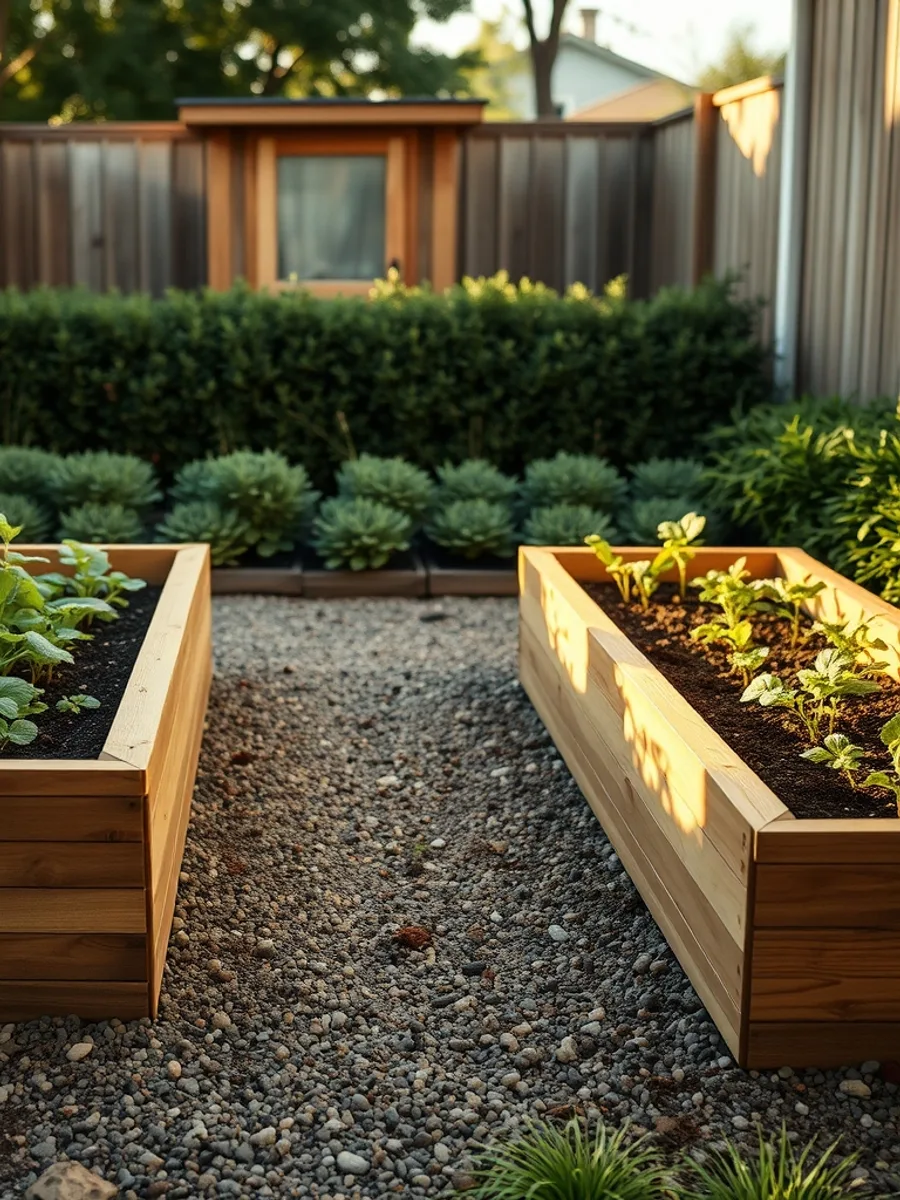
Raised beds are usually bought before they are planned, and the layout is decided by where the boxes fit rather than where the garden works. In a small yard that means beds too wide to reach across, paths too narrow to kneel in, and a plot harder to manage than the ground was.
This post contains affiliate links. If you buy through them, we may earn a commission at no extra cost to you. Read our Affiliate Disclosure.
Size the bed from your reach
The controlling dimension is not the yard. It is your arm.
A bed should be no wider than about 4 feet, because you need to reach the middle from both sides. If a bed sits against a fence or wall and can only be reached from one side, 2 to 2.5 feet is the practical maximum. This single rule prevents the most common raised-bed regret: a 6-foot-wide bed that requires stepping into it, compacting the soil you spent money filling.
Length is flexible: 8 feet is common because lumber comes in that length, but 4, 6 or 10 feet all work. Height trades bending against cost. 10 to 12 inches suits salads and most vegetables; 16 to 18 inches is kinder on the back and better for deep roots, and anything taller needs bracing.
Path width is where small yards lose usable space. A path of 24 to 30 inches lets you kneel, wheel a wheelbarrow or carry a watering can without stepping on the bed. Narrower paths look tidy in a plan and are miserable in July.
One bed or two, and where they go
Two smaller beds with a path between them beat one large bed in almost every small yard. They let you rotate crops, separate a thirsty bed from a drought-tolerant one, and reach everything without walking on soil.
Placement matters more than shape. Put beds where the sun is best, long axis east to west if you can, so tall crops at the north end do not shade the rest. Keep a clear route from the faucet; carrying water 50 feet gets old quickly.
Beds against a fence
A bed against a fence is efficient — one path serves one side — but fence panels cast shade and treated lumber is a consideration for edibles. Leave a few inches for air circulation and maintenance, line the fence side if you are worried about treatment, and put shade-tolerant crops at that edge: chard, lettuce, parsley, mint.
If the yard is paved and you cannot plant into the ground, the same layout logic applies to containers, which our container planters guide covers in more detail.
Lay out the planting, not just the boxes
A raised bed is usually planted in blocks rather than long rows, because blocks use the space more efficiently and shade the soil, which reduces watering.
Divide each bed into squares of roughly a foot and assign crops by size. A 4-by-8 bed gives you 32 squares. Tall crops — tomatoes, climbing beans, sweet corn — go on the north side so they do not shade the rest. Low, fast crops — lettuce, radish, scallions — go at the front and get replanted through the season. Perennials that stay put, such as rhubarb or rosemary, deserve a bed end rather than a square in the middle.
Leave one gap: a bed planted to the last inch has nowhere to put a tray, a trowel or the harvest. A small pad or a board at one end solves it.
Succession keeps a small garden productive. Rather than planting everything in May, sow a little every three or four weeks and keep a tray of seedlings ready to drop in when a crop comes out. Two beds make this easier: one can rest while the other crops.
Filling the bed without wasting money
Soil volume surprises people. A 4-by-8 bed at 12 inches deep takes roughly a cubic yard of fill; at 18 inches, about a yard and a half. Buying that volume by the bag gets expensive, so a bulk delivery is usually better value if access allows.
A common approach fills the lower third with rough organic matter — logs, branches, partly rotted leaves — and tops the rest with soil and compost. The wood holds moisture and reduces the volume you buy. Do not use treated offcuts or painted lumber for this layer.
Whatever you fill with, the bed will settle by several inches in the first season. Fill slightly proud of the final level and top up in fall.
| Product | Best for | What to know |
|---|---|---|
| Cedar bed kit | Most backyard beds | Naturally rot-resistant and light to handle; typically 7 to 10 years before boards soften, and check the corner joints |
| Galvanized steel bed | Wet climates and long life | Very durable and warms quickly in spring, but the metal edge gets hot in sun and needs a thick mulch |
| Pressure-treated pine kit | Budget beds | Cheapest per foot and widely available; heavier than cedar, and the treatment is a consideration for edibles |
| Fabric grow bed | Rentals and paved yards | Cheap, light and movable, but it dries out faster and has a short life in strong sun |
Useful starting points: a cedar raised bed kit in a 4-by-8 size, a galvanized steel raised bed if the yard stays wet, a bulk vegetable soil and compost mix for filling, and a row cover with hoops against birds and late frost. If water is the constraint, low-water planting covers what to grow when you cannot irrigate often, and the kitchen herb garden is the best use of a bed end near the door.
What to check before you build
- Can you reach the middle of the bed from both long sides?
- Is the path wide enough to kneel and to move a wheelbarrow?
- Will the tallest crops shade the rest at midsummer?
- Is there a route for water, and a faucet within hose distance?
- Is the ground below level, and does it drain?
- Have you checked the load if the bed sits on a deck or roof?
FAQ
How wide should a raised bed be?
Four feet is the usual maximum when you can reach both sides, which puts the middle within arm's reach. Against a fence, keep it to 2 to 2.5 feet. Length is limited only by space and lumber.
How deep does a raised bed need to be for vegetables?
Ten to twelve inches is enough for salad, herbs, beans and most roots. Tomatoes and carrots do better at 16 to 18 inches. Deeper beds cost more to fill, so go deeper only for the crops you plan to grow.
Can I put a raised bed on concrete?
Yes, with drainage and enough depth: 12 to 18 inches of soil on a hard surface, over a permeable base. Expect faster drying than a bed on soil, and avoid spots where water pools.