A Balcony Garden for Beginners
A first balcony garden plan that accounts for light, wind and weight, with the pots, soil and plants most likely to survive a hot, windy city summer.
A balcony is a harder growing environment than a garden, and most beginner failures have nothing to do with skill. Pots dry out faster than beds, wind strips moisture and snaps stems, and a railing that looks sturdy may not hold a wet planter. Start by reading the space rather than choosing plants.
This post contains affiliate links. If you buy through them, we may earn a commission at no extra cost to you. Read our Affiliate Disclosure.
Read the balcony before you buy a plant
Spend a day noting three things: how many hours of direct sun the balcony gets, where the wind comes from, and what the railing is actually fixed to.
Sun is measured, not guessed. A south-facing balcony may get eight hours in summer; a north-facing one may get none. Most herbs and vegetables want four to six hours of direct sun to be worth growing, and shade-tolerant plants will sulk in full sun. Watch the balcony at mid-morning, midday and late afternoon, and note which half is in shadow.
Wind is the reason balcony plants fail in week three. Upper floors catch more of it, and a corner balcony can be a wind tunnel. If the balcony is exposed, choose low, sturdy plants, group pots together so they shelter each other, and avoid tall single-stem plants in light plastic pots.
Weight is the third limit, and the one people ignore. Wet potting mix is heavy, and a row of large pots along a balcony edge adds up. Check your building's rules on balcony loads, keep the heaviest pots near the wall rather than the railing, and prefer several medium pots over one enormous one.
Pots, drainage and the soil mistake
Every pot needs a drainage hole. A pot without one holds a stagnant layer at the bottom that rots roots, and a layer of gravel in the bottom does not fix it. If you have a decorative pot with no hole, use it as a cachepot with a plastic nursery pot inside.
Size matters more than material for beginners. A pot of 12 to 14 inches across holds enough soil to buffer a hot afternoon; a 6-inch pot may need water twice a day in July. Terracotta dries faster than glazed ceramic or plastic, which is either an advantage in a wet climate or a chore in a dry one.
Soil, not garden earth
Use a potting mix formulated for containers, not soil dug from a garden. Garden soil compacts in a pot, drains poorly and can carry weed seeds and pests. A container mix holds air and water in the right proportion and is worth the difference in price.
Do not fill a pot to the brim: leave an inch or two of space below the rim so water can pool and soak in rather than running straight off. And water newly planted pots thoroughly at the start, until water runs from the drainage hole, because dry potting mix can be surprisingly hard to rewet.
What to grow first
Beginners do best with plants that forgive irregular watering and do not need pollination or staking.
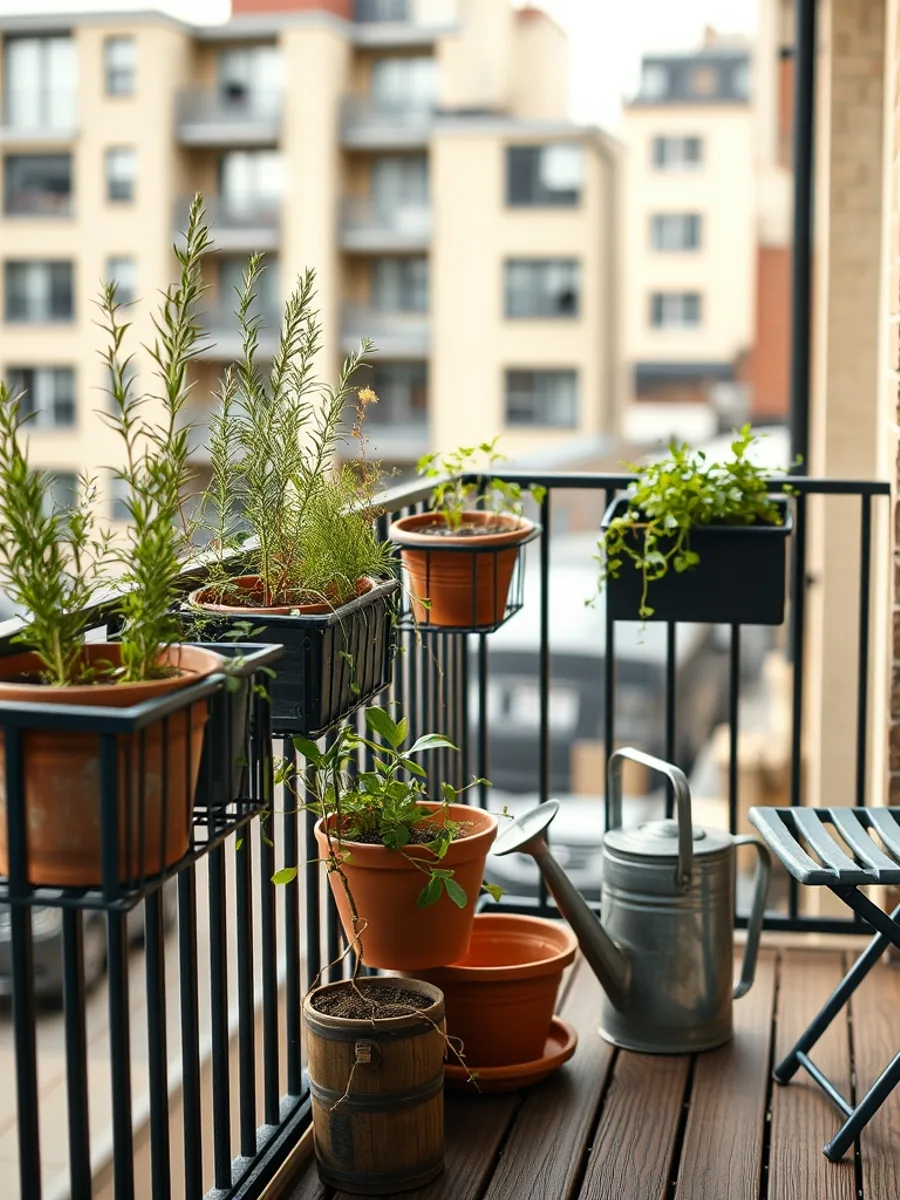
Herbs are the obvious start and the most useful: rosemary, thyme, sage and mint are tough, and mint is best in its own pot because it spreads. Basil is less forgiving and wants heat and consistent moisture. Chives and parsley sit in between.
For something to eat, salad greens and radishes are fast and shallow-rooted, which suits pots. Cherry tomatoes work on a sunny balcony but need a large pot, a support and steady feeding. Chili plants are compact and productive in heat. Root vegetables and anything large — zucchini, late-season potatoes — want more soil than most balconies can give.
If you want flowers, choose compact varieties and deadhead them. Trailing plants soften a railing, but check they are on the sheltered side or they will be shredded by wind.
Watering, feeding and going away
Balcony pots dry out from the top, the sides and the wind, often all at once. In summer, small pots may need water every morning. Water until it runs out of the bottom, then stop; watering a little and often leaves the lower roots dry.
Feeding matters because container plants exhaust their potting mix. A liquid feed every week or two through the growing season is usually enough, less for herbs you eat often, which can taste strong when overfed.
If you travel, group pots in the shade, stand them in a tray of water for short absences, or use self-watering planters for the thirstiest plants. A self-watering trough is also the simplest answer for anyone who works long days.
For the hardware, self-watering planters with a water reservoir reduce the daily watering, railing planter brackets that clamp without drilling suit rented balconies, a container potting mix is the right base, and a two-gallon watering can with a fine spray head makes watering seedlings much easier. Our container planters guide goes further on pot sizes and materials. If the herbs are destined for cooking, the kitchen herb garden explains which ones tolerate a balcony, and low-water planting is the reference for anyone who cannot water every day.
What to check before planting
- Does every pot have a drainage hole, and is there a saucer to catch the overflow?
- Will the railing brackets take the weight of a wet planter in wind?
- Is there an outdoor faucet or a route to carry water?
- Are the heaviest pots against the wall rather than the railing?
- Is there room to move pots into shade during a heat wave?
FAQ
How much sun does a balcony garden need?
Four to six hours of direct sun suits most herbs and vegetables. Less than that limits you to leafy greens, mint and shade-tolerant flowers. Measure it in summer, since a winter balcony can be in shadow all day and still be described as sunny.
Can I grow vegetables on a north-facing balcony?
Yes, but choose accordingly: salad greens, spinach, chard, mint, parsley and chives will crop in partial shade. Fruiting plants such as tomatoes, peppers and zucchini need direct sun and will not perform without it, however carefully they are fed.
How do I stop pots drying out while I am at work?
Group pots together to shade each other, mulch the surface with gravel or bark, and use self-watering containers for the thirstiest plants. Moving small pots out of the afternoon sun is more effective than any gadget, and it costs nothing.