Small Bathroom Storage Ideas That Actually Fit
In a five-by-eight bathroom, storage is wall space and cabinet depth, not furniture. Measure first, then choose the pieces that clear the door swing.
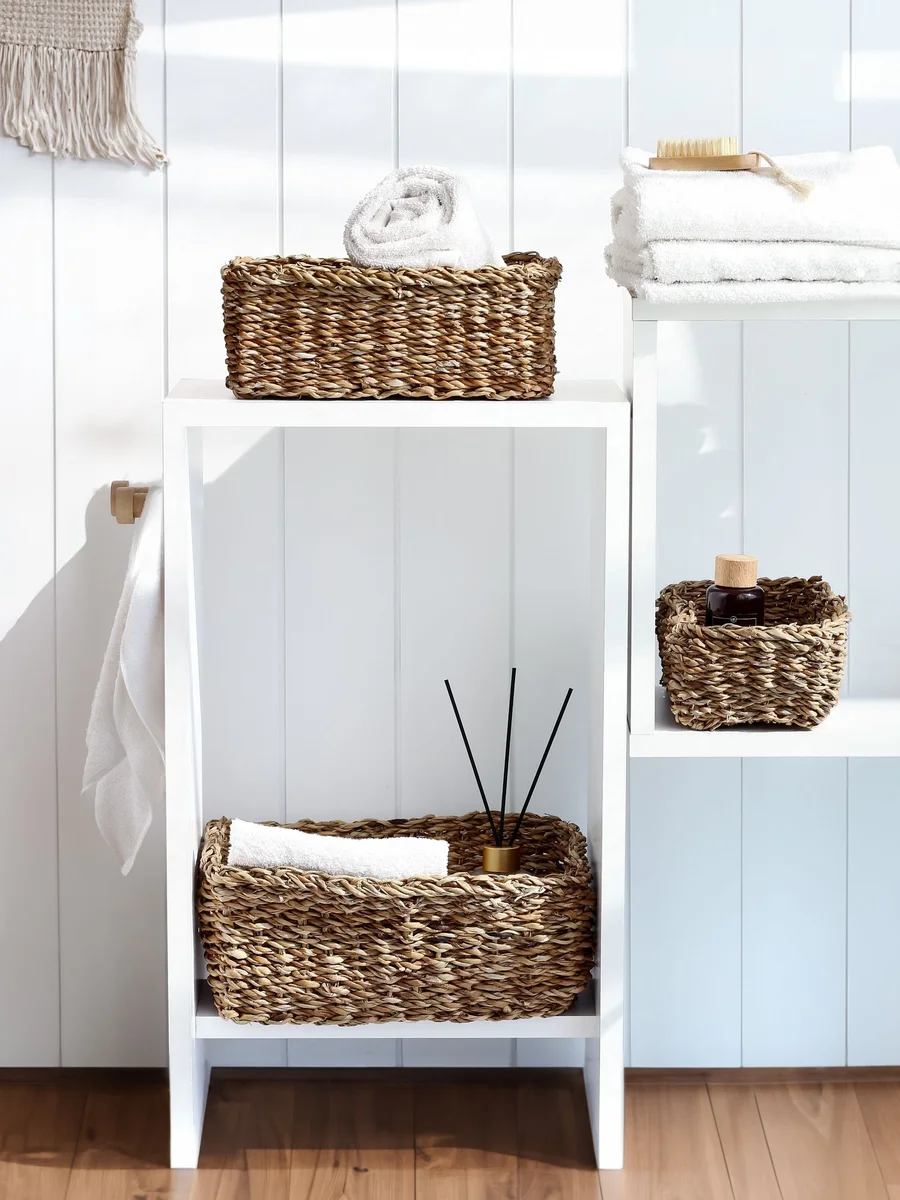
A small bathroom holds less than people expect: a vanity, a mirror, and a strip of wall above the toilet. Most storage failures in these rooms come from buying containers before measuring the space they have to live in, or from adding furniture to a floor that is mostly door swing.
This post contains affiliate links. If you buy through them, we may earn a commission at no extra cost to you. Read our Affiliate Disclosure.
Measure the space before you buy anything
Four numbers decide what fits. The width between the vanity and the nearest wall. The depth of the vanity cabinet. The arc of the door, which is often wider than the floor you think you have. And the distance from the floor to the top of the toilet tank, since most over-the-toilet units are built around that height.
Then find the studs. A magnet stud finder or a firm knock will tell you where the framing is, and a cabinet holding towels and bottles needs at least two screws in wood, not four in drywall anchors. In a rental with tile, note the grout lines before you plan adhesive hooks: a strip that spans a grout line holds less than one that sits flat on a single tile.
Depth is the constraint people forget. A cabinet more than 9 inches deep over a toilet puts the front edge where a shoulder goes when someone stands up. Shelves 6 to 8 inches deep hold bottles and folded towels without turning the room into a slalom.
The wall above the toilet is the biggest unused space
This is the one spot in most small bathrooms where you can add storage without losing floor. A closed cabinet is usually the better choice in a humid room: doors keep spare towels and toothbrushes out of splash range and out of sight, and the flat top gives you a place for a small plant or a jar of bath salts.
Look for a unit with adjustable shelves, since bottle heights vary more than shelf heights do, and check that the legs or frame clear the water supply line on the wall behind the toilet. If the tank lid is high or the toilet is a one-piece model, measure from the floor to the lid and add two inches before you buy.
Renting? Tension poles and adhesive hooks
A tension pole shelf set spans from floor to ceiling without a single hole. It works well over a toilet in a rented apartment, provided the ceiling is flat and the pole is not carrying anything heavy at the top. Set the pole so the shelves land between the tank and the ceiling rather than directly behind your head.
Adhesive hooks are rated by weight, and the rating assumes a smooth, clean, fully cured surface. A 5-pound hook holding a wet towel is already at its limit. Remove adhesive strips slowly with a length of fishing line sawed behind the tab rather than pulling outward, which takes paint with it.
Make the vanity cabinet work harder
Most vanity cabinets are one shelf and a lot of dead air around the plumbing. A pull-out drawer or a two-tier sliding organizer turns that air into usable height, and clear bins let you see what is about to run out before you buy a fourth bottle of the same thing.
Before ordering anything, measure around the P-trap and the shutoff valves. A drawer that clears the pipes at the back still needs a few inches of travel at the front. Stackable bins should be short enough that the top one lifts out without hitting the shelf above.
Dampness is the other constraint. Cabinets under a sink stay humid, so keep cardboard packaging out, leave the doors open for an hour after a hot shower, and put a moisture absorber at the back if the cabinet smells musty. Nothing that rusts, and nothing that comes in a paper box, belongs on the cabinet floor.
Use the shower and tub edges carefully
A corner tension caddy is the standard answer and it works if you buy one with stainless or coated aluminum poles; the cheap chrome ones pit within a season. Set it so the lowest shelf clears the tub rim and the top does not touch the showerhead.
Over-the-door hanging caddies are fine for a shower door but add weight to hinges that were not designed for it. Ledge shelves only make sense on tile that is already there, and they must be drilled into studs or set on brackets that bear on the wall, not glued.
Keep glass out of the shower entirely. A dropped bottle in a wet tub is the most common bathroom injury, and a plastic or silicone set costs less than a single emergency visit. Medications do not belong in the shower either; heat and steam degrade them faster than the expiry date suggests.
What should not live in a bathroom
Some things are better stored elsewhere even when the bathroom has room. Medications keep better in a dry hall closet than above a steaming shower. Perfume fades in light and heat. Spare toilet paper stored where it gets splashed is a false economy. Electronics, wooden combs, and anything with a battery all do better outside the damp.
Towels are the exception that proves the rule: a small stack in the room is useful, a full linen cupboard is not. Our guide to laundry room setup covers how to run towels through a rotation so the bathroom stack stays small and the closet holds the overflow.
| Product | Best for | What to know |
|---|---|---|
| Slim over-the-toilet cabinet | Rentals and small bathrooms with wall space | Keep depth at 9 inches or less; anchor two screws into studs |
| Tension pole shelf set | Rentals where drilling is not allowed | Needs a flat ceiling; keep heavy items on the lowest shelves |
| Under-sink pull-out drawer | Vanities with one fixed shelf | Measure around the P-trap and shutoff valves before ordering |
| Corner tension shower caddy | Showers with no ledge or niche | Choose stainless or coated aluminum poles; chrome pits |
| Stackable clear bins | Deep cabinets and linen overflow | Short enough to lift out; skip cardboard packaging in damp |
A practical combination for a five-by-eight bathroom is a slim over-the-toilet cabinet, an under-sink pull-out drawer organizer, and a corner tension shower caddy. Add a set of stackable clear storage bins if the cabinet is deep, and an over-the-door hook rack for towels if wall space has run out.
If the bathroom shares a wall with a bedroom, the under-bed storage ideas are useful for the overflow that never really belongs in either room. And when the cabinet itself is the problem, the principles in our closet organization basics apply: measure the depth, group by use, and leave a third of the space empty so the room can breathe.
FAQ
Will an over-the-toilet cabinet fit over a one-piece toilet?
Usually, but check the tank height first. One-piece toilets often have a taller tank and a wider base than two-piece models, and the cabinet's lowest shelf or crossbar can foul the lid. Measure from the floor to the top of the tank, add two inches, and compare that to the unit's stated clearance.
Can I add bathroom storage in a rental without drilling?
Yes, within limits. Tension poles, over-the-door hooks, and adhesive strips rated for the actual load all work, and none of them leave a hole. Stay well under each product's weight rating, apply adhesive to a clean dry surface, and remove it slowly with fishing line rather than pulling the tab straight out.
How do I stop under-sink storage from getting damp?
Take everything out of cardboard, leave the cabinet doors open for an hour after a hot shower, and put a small moisture absorber at the back. If the cabinet floor stays wet, the leak is usually a loose supply connection or a drain gasket, which is a repair rather than a storage problem.