Mudroom Benches and the Storage That Comes With Them
A bench has to seat a person, hide the mess, and survive wet boots. Most fail on the third job, because the storage under the seat is sized for slippers.
A bench in the entry is doing three jobs at once: a place to sit while you pull on boots, a lid over things you would rather not look at, and the first line of defense against grit tracked through the house. Most benches fail at that third job. The storage underneath is sized for slippers rather than the coat, the bag, and the two pairs of shoes that arrive together at six in the evening.
This post contains affiliate links. If you buy through them, we may earn a commission at no extra cost to you. Read our Affiliate Disclosure.
Measure the wall before you shop
Three dimensions decide whether a bench works: seat height, seat depth, and the clear floor in front of it. A seat height of 17 to 19 inches suits most adults. Lower than that and standing up becomes a push; higher and shorter legs dangle. Depth is a compromise, since 15 to 18 inches is deep enough to sit on and shallow enough that the bench does not eat the hallway. Past 20 inches it starts to feel like a shelf you happen to sit on.
Then the floor. Leave about 36 inches of clear width for a person to pass with a bag, and check the door swing before committing to a bench that projects into the room. A bench that blocks a closet door is worse than no bench at all.
The seat-height trap
Ready-made benches often list an overall height that includes a back panel or a top shelf, which is not the number you sit on. Look for seat height specifically, or measure from the floor to the cabinet's horizontal surface in the product dimensions. The difference is often three to four inches, which is the gap between comfortable and not.
The four kinds of storage
Almost every bench sold today uses one of four arrangements, and each suits a different kind of household.
- Open cubbies under the seat. Cheapest and most forgiving, because a basket can become a drawer. Everything is visible, so it only works if the contents are presentable.
- A lift-up lid. One large compartment, good for bags, sports gear, and anything awkward. Insist on a hinge that holds itself open; a lid that drops while you are rummaging is the fastest way to stop using the bench.
- Drawers. Best for gloves, hats, keys, and small items that otherwise migrate across the house. Check that the drawers clear the door trim when pulled out.
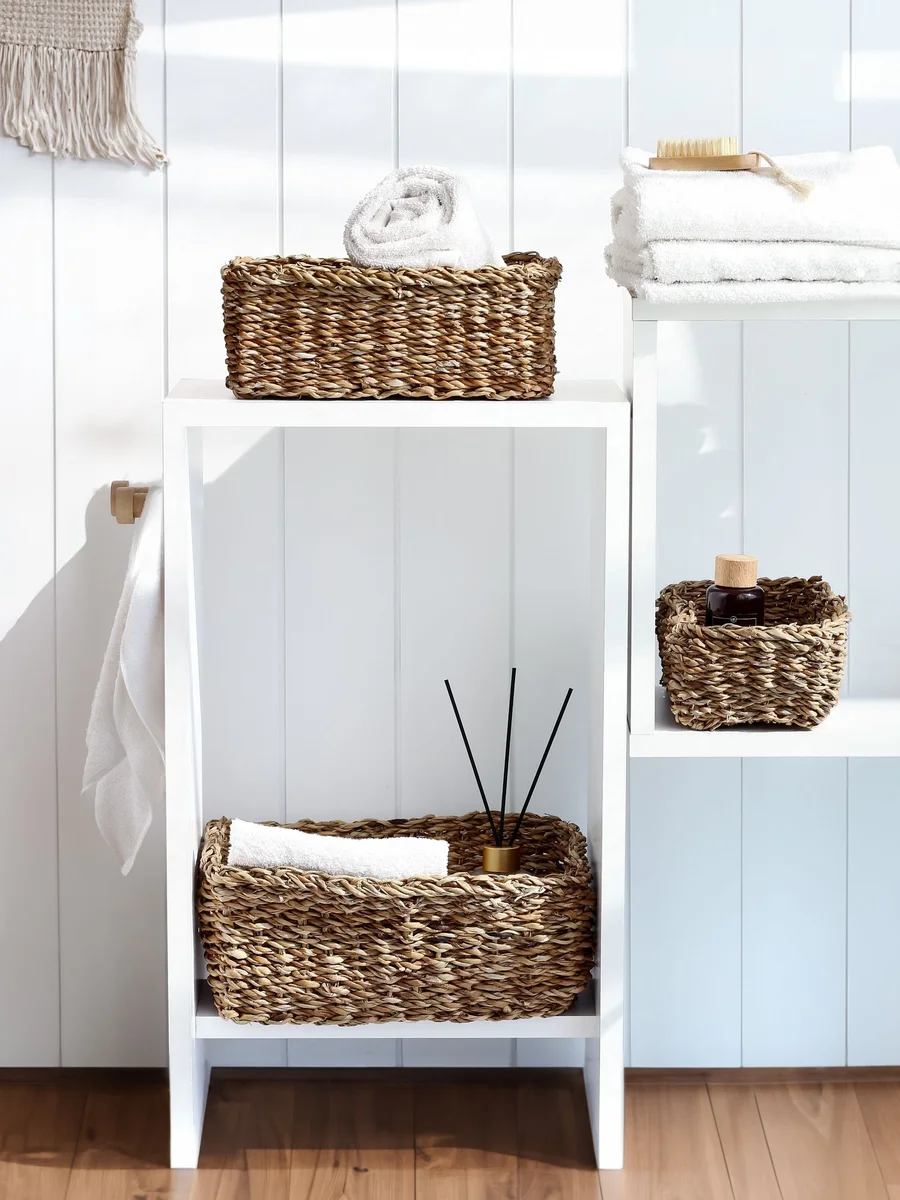
- Baskets on a lower shelf. The most flexible version and the easiest to change later. The basket does the work of hiding, and a torn liner can be replaced for the price of a liner.
Hooks, trays, and the wet problem
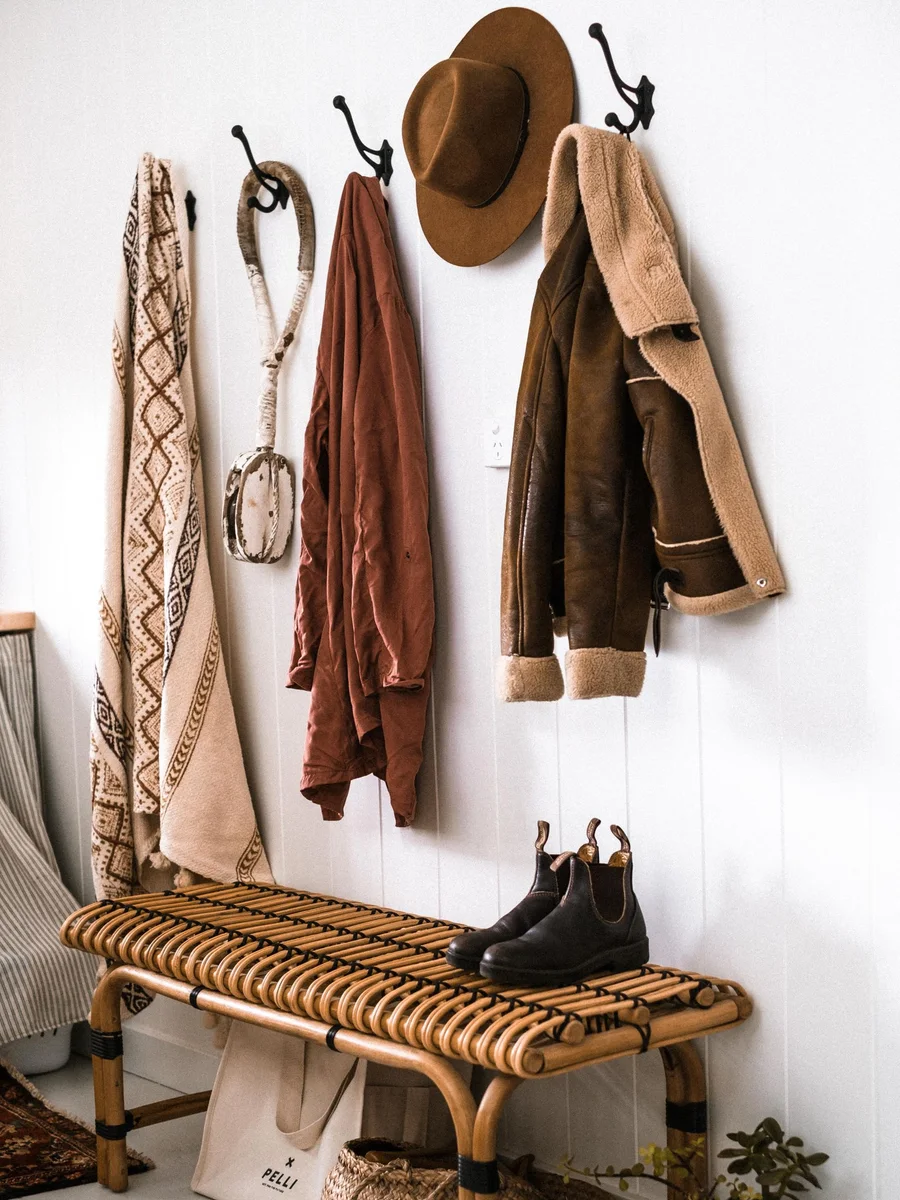
Hooks are the highest-value addition to any entry. Adults' hooks at 60 to 66 inches from the floor, children's at about 48 inches, spaced 6 to 8 inches apart so coats are not stacked on top of each other. A row of five hooks covers a family of four with one spare for a visitor.
Wet coats need air. If the wall behind the hooks is a cold exterior wall, leave a small gap behind the hanging coats or the backs stay damp. A boot tray with a raised rim, roughly 24 by 16 inches, does more for the floor than any amount of scrubbing, and a lidded bin for hats and mittens keeps them out of the tray.
For more on arranging the zone around the door, the entryway drop zone covers the sequence of arriving — keys, coat, shoes, bag — and why the order matters more than the furniture. If your space is shared with laundry, the laundry room setup deals with the same wet-storage problem in a different room.
Open or closed
A closed bench with a solid front reads calmer and hides a great deal. It also traps damp and smells if wet things go in and the lid stays down. An open bench is honest about the mess and dries faster.
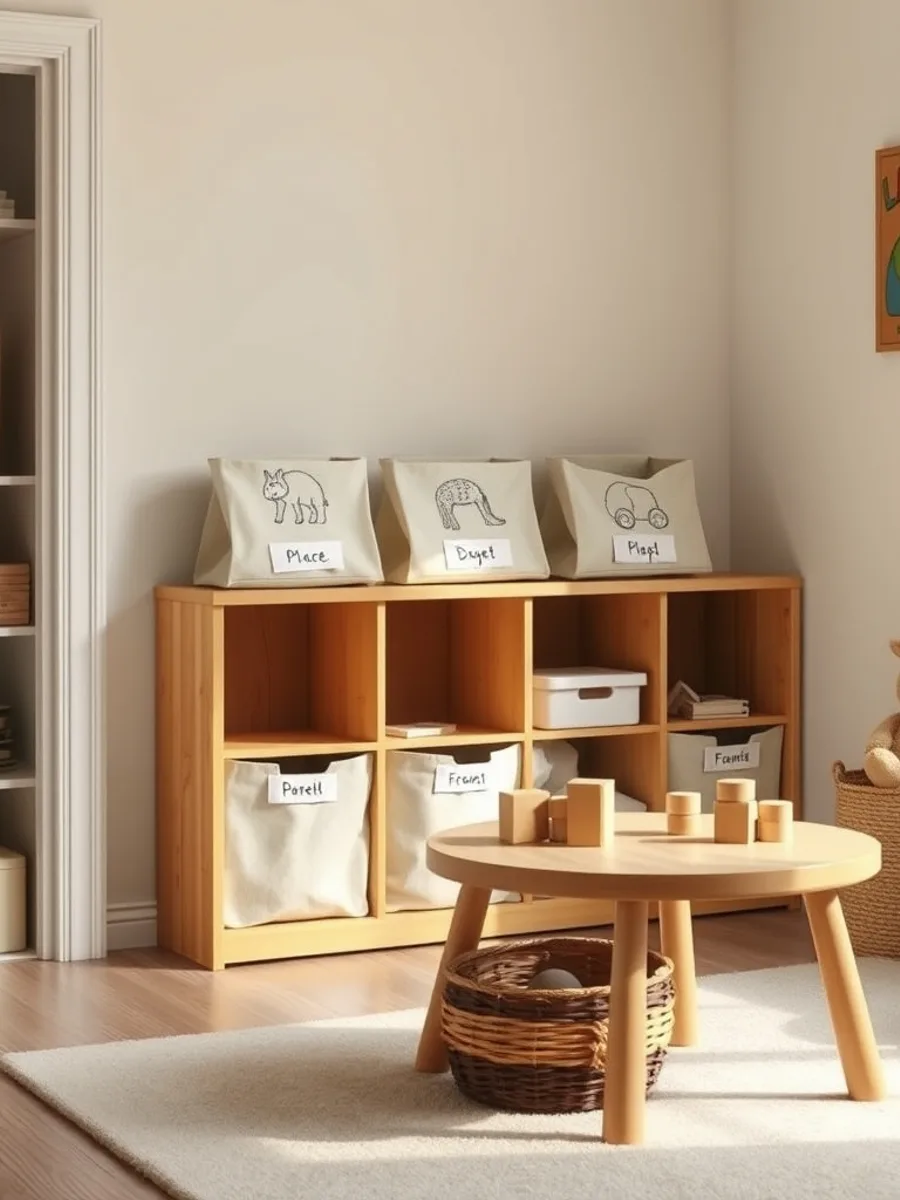
The compromise most people land on is closed on the body, open at the bottom: a seat with a lift-up lid, plus a shelf at floor level with two baskets. Wet boots go on the shelf where air reaches them, dry gear goes inside. Our guide to storage baskets covers sizing a basket to a cubby so it slides rather than jams.
What to check before you buy
- Seat height and depth, measured on the actual seating surface.
- Interior dimensions of cubbies, not just the exterior footprint. A 13-inch cubby will not take a standard 12-inch basket once the frame is accounted for.
- Hinge quality on a lift-up lid, and whether it is rated to stay open.
- Wall anchoring. Any bench taller than about 30 inches should be fixed to a stud; children climb.
- Material at floor level. Solid wood and plywood survive damp better than particleboard, which swells permanently once it takes on water.
- Coat capacity against the number of people who actually use the door.
A mudroom bench with shoe storage underneath covers the seating and the cubbies in one piece, while a wall-mounted row of coat hooks handles the vertical space above it. A rimmed boot tray protects the floor, and woven cubby baskets turn open shelves into drawers.
FAQ
How deep should a mudroom bench be?
Fifteen to eighteen inches is the useful range. Anything shallower is uncomfortable to sit on for more than a moment, and anything deeper starts to obstruct the hallway. If the bench must hold a boot tray in front as well, add six inches of clear floor to your planning.
Can a mudroom bench go against an exterior wall?
Yes, and it is often the only option, but insulate between the bench and the wall if you can. A solid bench tight against a cold wall collects condensation on the back panel, which is where mold starts. Leaving a one-inch air gap and ventilating the cubbies helps.
What do you put in a mudroom bench with a lift-up lid?
Bulky things that are dry and used often: gym bags, a folded raincoat, the dog's towel, reusable shopping bags. Keep wet boots and soaked gloves out of the compartment. A lid traps moisture, and a closed box of damp fabric will smell within a week.