Under-Bed Storage Without the Chaos
The gap under a bed is the largest drawer in most homes and the least considered. Measure it, choose containers that suit your floor, and it stops being a dust trap.
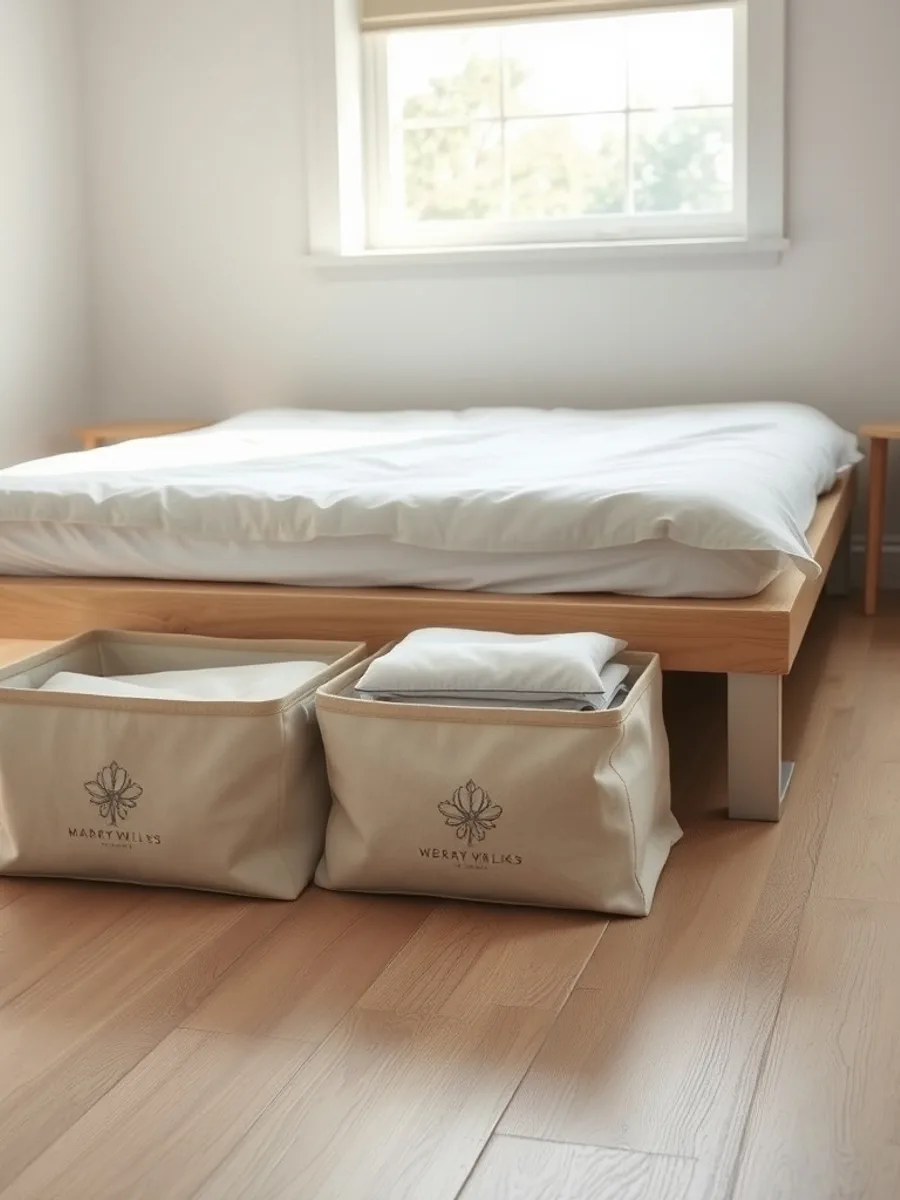
The space under a bed is the largest drawer in most homes and the least considered. Left alone it collects dust, lost socks, and two or three boxes nobody can name without opening. A measured, unglamorous approach turns it into storage you can actually retrieve things from.
This post contains affiliate links. If you buy through them, we may earn a commission at no extra cost to you. Read our Affiliate Disclosure.
Decide what deserves to live down there
Under-bed space is dark, low, and exposed to floor-level dust and cold air. The test is simple: if you need it more than twice a year, it does not belong on the floor.
Four categories that earn the space
- Seasonal bedding. Duvets, extra blankets, the winter quilt. Bulky, used twice a year, easy to compress.
- Out-of-season clothing. Sweaters in July, linen in January. Fold flat, one season per container, so the swap is a single trip.
- Guest linens. A folded set per bed, pillowcases inside the matching sheet so nothing gets separated.
- Occasional gear. Nested suitcases, gift wrap, off-season shoes, the board games that come out at holidays.
What should stay out: anything you reach for weekly, food, damp towels, and paper you care about. Photographs and documents absorb moisture every time the room's humidity swings, and under a bed is where those swings are largest.
Measure the gap before you buy anything
Manufacturers list clearance, but the number that matters is the lowest point of your actual frame, including the center rail and any leg braces. Most frames give you somewhere between 6 and 10 inches; platform beds are often lower, and some metal frames sit much higher.
Measure three things: floor to the lowest obstruction, the depth from headboard rail to foot, and the width between the legs. Subtract roughly two inches from each figure, because a container that fits exactly will not slide out when it is full. Note the floor surface. A heavy bin drags on carpet; on oak it glides and can mark it. Check whether a center support splits the space into two shallow channels, which changes what fits.
If the gap is under five inches, flat boxes and a good dust ruffle are the honest answer. Bed risers add three to eight inches cheaply and suit rentals, but check the weight rating against the frame and mattress together and never stack them. They also change how the bed feels to get into, which matters for anyone with knee or hip trouble.
Choose a format that matches the floor
| Product | Best for | What to know |
|---|---|---|
| Zippered fabric bag | Bedding and off-season clothing | Breathable and cheap, but drags on carpet; look for a full-length zip and reinforced handles |
| Wheeled plastic bin | Heavy items in a carpeted room | Keeps dust out and rolls, but wheels can scratch hard floors; measure height including the wheels |
| Flat lidded box | Frames with under 5 inches of clearance | The only option in very low gaps; stack two only if the frame allows it |
| Vacuum-sealed bag | Bulky duvets and pillows | Saves real space, but long-term compression flattens down and foam; store those loose |
| Rolling drawer unit | Renters who want drawer action | Feels like furniture rather than storage; needs a flat floor and about 10 inches of height |
Buy after measuring, not before. Prices on all of these move constantly, so check current price rather than trusting a figure you saw last year. For most bedrooms, a pair of wheeled under-bed storage bins plus one zippered fabric bag for bedding covers the whole gap without overbuying.
Dust, damp, and the boring part
Floor-level dust is coarser than shelf dust, and lidded containers do most of the work. Twice a year, pull everything out, vacuum the floor and the frame, wipe the lids, and put it back. It takes twenty minutes and prevents the smell that builds when fabric sits against a cold floor for a year.
Moisture is the real risk. A pack of silica gel desiccant packets in each container, refreshed at the seasonal swap, keeps bedding from smelling of the floor. In basements and ground-floor apartments, put a runner under the bins so cold concrete is not in direct contact. Cedar blocks help with woolens but do not kill moths; they discourage them, and only while the oil still smells. Sand them lightly once a year if the scent has gone.
One more thing worth knowing: mattresses need air. If your bed sits on slats, do not pack containers so tightly that the underside is sealed.
Make it retrievable, or it becomes a rumor
Storage you cannot reach is storage you forget, and forgotten storage gets duplicated. Label the short end that faces out, not the lid, because a lid label is invisible once the bin is under the bed. Keep one index card taped inside the closet door listing what is where, and update it at the swap.
Keep the items you use most in the front third of the gap and the once-a-year things at the back. Rotate on a schedule rather than by feel: two dates a year, spring and autumn.
If you are reorganizing more than the bed, the same logic applies to the rest of the room. Our guide to closet organization basics covers the hanging and folding side, and storage baskets that hold their shape suit anything that lives at eye level rather than floor level.
FAQ
Does storing things under the bed make allergies worse?
It can. Dust settles at floor level and is disturbed every time you pull a bin out, and soft items stored uncovered hold it. Lidded containers, a vacuum twice a year, and indoor humidity kept under about 50 percent solve most of it. If someone in the house is sensitive, use fabric bags rather than open boxes and wash bedding before use each season.
Can I store a suitcase under the bed?
Yes, and it is one of the better uses of the space. Empty it, wipe the wheels, and leave it unzipped or cracked open so trapped damp air can escape. Nest a smaller bag inside a larger one. Do not store a suitcase that came in damp from a trip; let it dry fully in a ventilated room first.
How do I stop bins sliding out of reach?
Friction works differently on each floor. On smooth floors, a strip of rubber grip mat under each bin stops them drifting. On carpet the problem is usually the opposite, bins that will not slide at all; wheeled bins, or a short loop of webbing taped to the front edge as a pull handle, make the difference between storage you use and storage you avoid.