Knife Blocks and Storage: What to Look For
A knife block is a compromise between protecting an edge, saving counter space, and drying a blade. Slot size and drainage decide which of those it gets right.
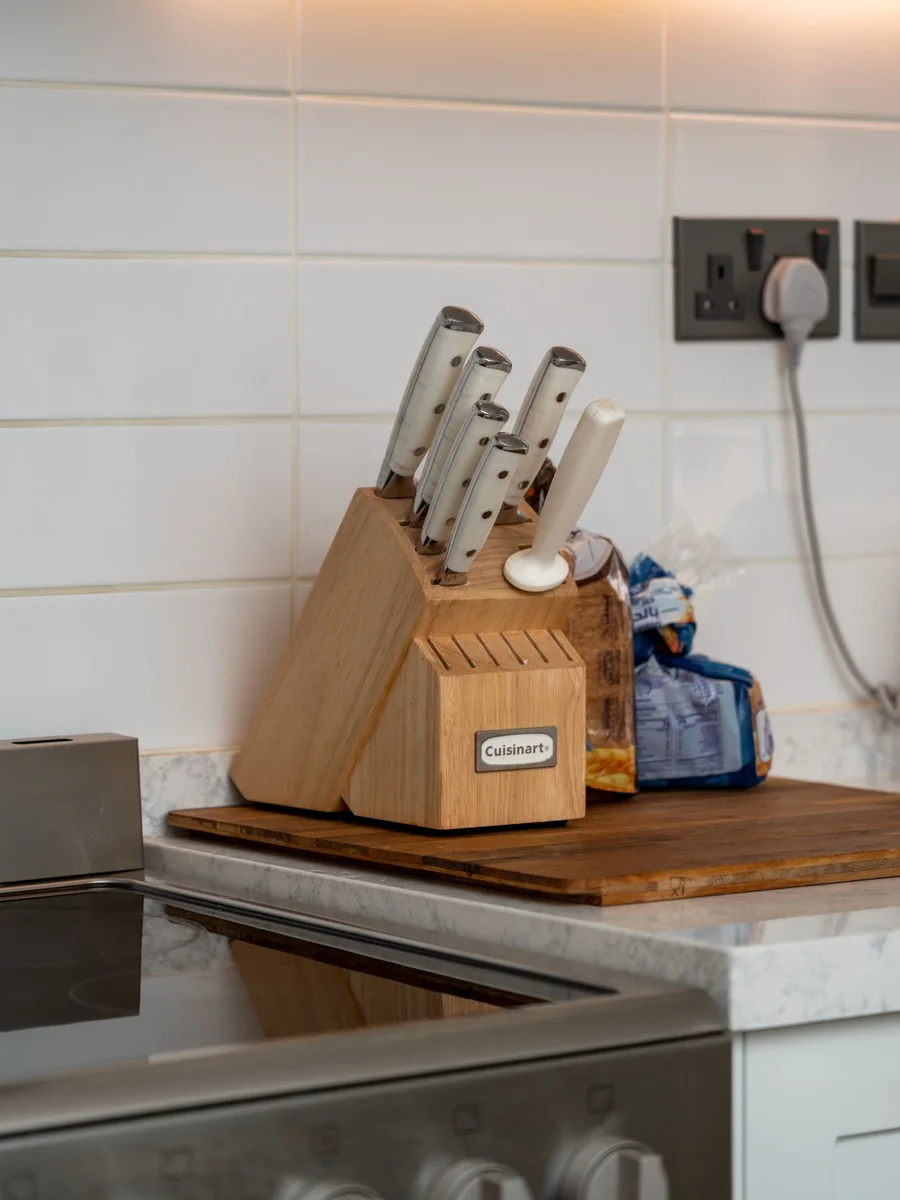
A knife block solves three problems at once and usually solves one of them badly. It keeps an edge off the counter, it stores knives where you can see them, and it gets a wet blade out of the drying rack. Which of those it does well comes down to slot geometry, material, and where the block sits relative to the board you actually cut on.
This post contains affiliate links. If you buy through them, we may earn a commission at no extra cost to you. Read our Affiliate Disclosure.
What a block is for, and what it is not
A block is storage, not maintenance. It will not keep a dull knife sharp, and a slot that grips the blade too tightly can roll an edge every time you pull the knife out. What a good block does is hold each knife so that the edge never touches anything harder than wood, and let air reach the blade so it does not sit wet.
That last point rules out more blocks than any other. A slot that is closed at the bottom collects water and crumbs, and a knife put away damp stays damp. Look for a block with slots that run through, or a base that lifts off, or at minimum a block you can stand on end to drain.
Capacity and slot geometry
Count the knives you own before you count the slots. Most households use three: a chef's knife, a paring knife, and a serrated knife for bread. A block with eight slots and three occupied ones is a seven-inch-deep box of empty air on your counter.
Slot width is the number that matters for fit. A chef's knife with a thick spine will not seat in a slot cut for a thin-bladed santoku, and forcing it widens the slot permanently. If the listing gives slot dimensions, compare them to the spine thickness at the heel of your heaviest knife. If it does not, buy from a seller who accepts returns.
Universal slots versus fitted slots
Fitted slots are cut to a specific set, usually sold with the block. They hold those knives beautifully and nothing else. Universal slots use angled, felt-lined channels or flexible fins that grip a range of blade widths, which is the better choice if your knives came from different places or you expect to add one.
The trade-off is grip. A universal block holds a thin paring knife and a heavy cleaver with the same indifferent pressure, so a very heavy knife can sit at an angle. Check the depth of the channel against the height of your tallest blade.
Materials
Wood, usually maple, beech, or acacia, is the traditional choice and still the best surface for an edge. It needs to be dry, and it needs occasional oiling. A wood block that lives beside the stove will absorb steam and grease, so keep it a foot or two away from the burners.
Bamboo is harder than most woods, cheaper, and more dimensionally stable, which means fewer cracked slots. It is also more abrasive against a fine edge over years of use. Plastic blocks are easy to wash and impossible to refinish; they scratch, hold stains, and look tired quickly. A magnetic strip is a different proposition entirely: it saves counter space, lets knives dry in the air, and leaves the edge exposed to anything that brushes past it.
| Product | Best for | What to know |
|---|---|---|
| Wooden block with angled slots | A matched set and a protected edge | Oil it monthly; keep it away from the stove |
| Bamboo block with universal slots | Mixed knives and small kitchens | Harder surface; check slot depth before buying |
| Magnetic wall strip | Saving counter space | Knives must be fully dry; mount into studs |
| In-drawer knife tray | Tight counters and households with children | Blades are hidden, but the drawer must be tall enough |
| Plastic block with drain holes | Rental kitchens and easy cleaning | Will scratch; edges dull faster than on wood |
Counter space and the drawer alternative
A block with a 45-degree slot arrangement takes up roughly 10 by 5 inches of counter and about 9 inches of height. Measure the space between the backsplash and the first appliance before you buy, and remember that the block needs clearance above it for the handles to rise.
If the counter is already crowded, an in-drawer tray is the least disruptive option: it takes no counter at all and keeps blades out of reach of children. A magnetic strip mounted on the wall above the prep area is the other space-free answer, and it has the side benefit of keeping the most-used knife in sight.
Our guide to kitchen counter organization deals with the broader question of what earns a permanent spot on the counter, and small kitchen storage ideas covers the vertical and drawer-based alternatives when the answer is nothing. If your block sits near the range, the seasoning and care notes in our cast iron skillet guide apply to any oiled wooden object in the same zone.
What to check before you buy
- Slot count against actual knives, not the set you might own one day.
- Slot depth and width for your heaviest blade, measured at the spine.
- Drainage, or a block that can be stood on end to dry.
- Stability. A tall, narrow block tips when a heavy knife is pulled out one-handed. Look for a base wider than the body.
- Feet. Rubber feet keep the block from sliding and lift the base off a wet counter.
- Refinishability. Solid wood can be sanded; veneer and plastic cannot.
A wooden knife block with angled slots suits a matched set, and a universal-slot block handles a drawer's worth of mismatched knives. For counters with no room at all, an in-drawer knife organizer and a magnetic knife strip are the two options worth measuring for.
FAQ
Is a wooden or magnetic knife storage better?
Wood protects the edge and hides the blade; a magnet saves space and lets the knife air-dry. If you have counter space and a good knife, wood is kinder to it. If you have a small kitchen or wash knives by hand and put them straight away, a magnet dries them faster and keeps them in reach.
Can I put a wet knife back in a knife block?
Not in a closed slot. Water sits at the bottom of the channel, and the blade stays damp against wood, which is how a block develops a smell. Dry the blade first, or use a block with through-slots and a removable base.
How often should a wooden knife block be oiled?
Every month or two in a working kitchen, and immediately if the wood looks pale or feels dry. Use a food-safe mineral oil, wipe off the excess, and let it sit overnight before putting knives back. Never use vegetable oil, which turns rancid in the slots.