The Best Ceramic Vase Sets for Every Budget
Vase sets look like a styling shortcut, but firing, glaze fit, and wall thickness decide whether they hold water and survive a year. Here is how to pick one.
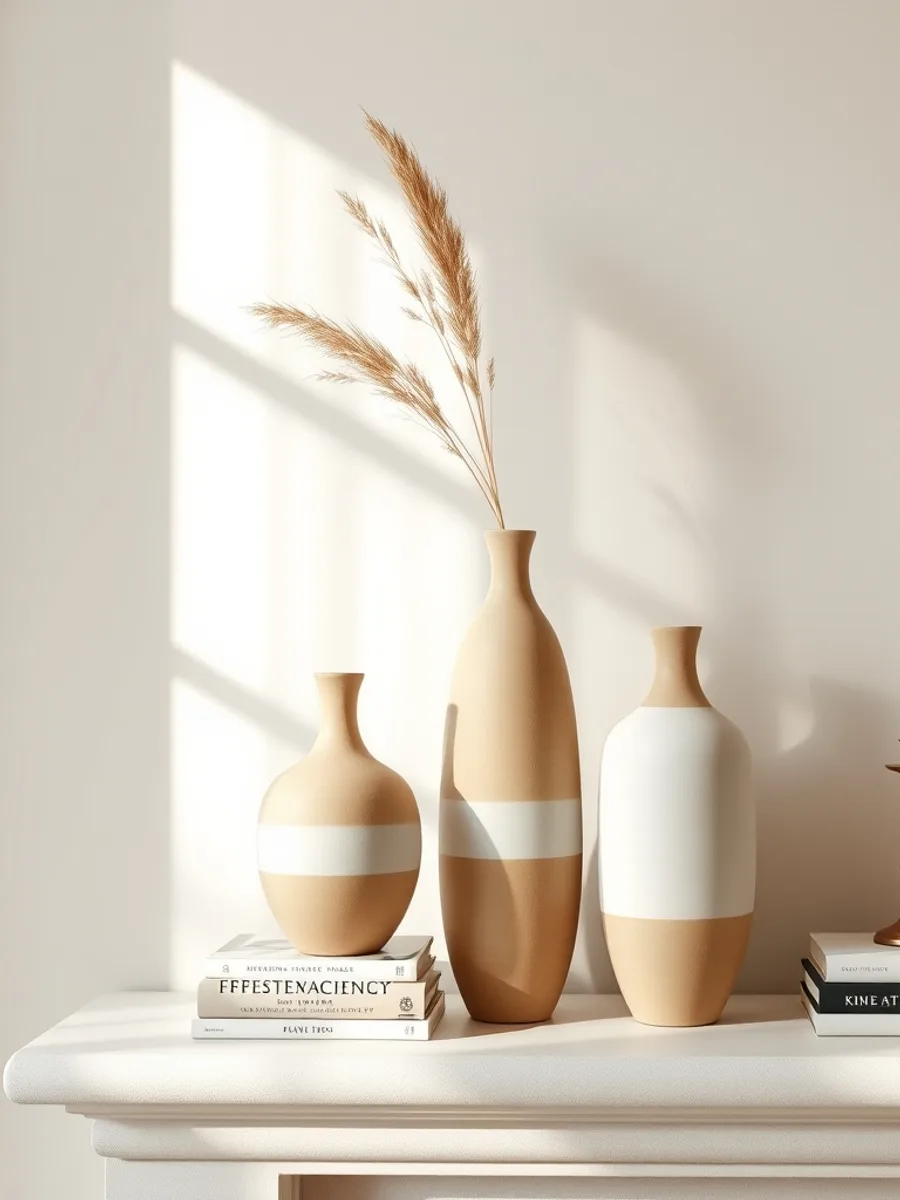
A single vase on a mantel often reads as an object that has not found its place. Three vases at different heights read as a decision. That is the practical case for buying ceramic vases in sets: proportion is easier to judge in a group, and the styling problem is solved before anything arrives. The harder question is which set, because this is a category where photographs flatter and shipping crates disappoint.
This post contains affiliate links. If you buy through them, we may earn a commission at no extra cost to you. Read our Affiliate Disclosure.
Why sets work harder than single vases
Most rooms need repetition before they feel composed. A pair of lamps, a row of books, three cushions on a sofa: the eye likes a rhythm it can follow. Vases do the same work at a smaller scale. A set of three gives you a tall, a medium, and a short form, enough to build a group on a mantel, a console, or the top of a bookcase without hunting for the missing piece for six months.
Sets also fix the matching problem. Buy one vase at a time and you end up with five objects that share nothing — different clay, different glaze sheen, different temperature of white. A set arrives with a common material and finish, so the group holds together even when the shapes differ.
What separates a good set from a cheap one
Ignore the styling photographs and read the specification. Four things matter.
Clay and firing. Earthenware is fired at roughly 1,800–2,000°F, stoneware at about 2,200–2,300°F, and porcelain higher still. Higher firing produces a denser body that chips less readily and holds water without a liner. If a listing says only "ceramic," assume earthenware and treat it gently.
Glaze fit. A glaze that does not fit its clay body will craze — fine cracks across the surface — or flake at the rim. Matte and reactive glazes are more prone to this than simple gloss, which is why a set with visible variation should come from a maker who fires consistently.
Wall thickness and weight. A vase that weighs almost nothing will tip when a cat brushes it or a door slams. A stable base — a foot ring wider than the body's midpoint — matters more than overall weight.
Watertightness. Many decorative vases are glazed outside only. If you plan to hold stems, look for "watertight" in the description, or accept that you will need a glass insert.
Firing temperature, in plain terms
The difference between earthenware and stoneware is behavior, not snobbery. Earthenware is softer, so it chips and stains more easily, and an unglazed foot will absorb water and mark a shelf. Stoneware shrugs off both. Porcelain is the hardest and the most brittle in thin sections — beautiful in a bud vase, riskier in a tall floor piece where a knock can crack the rim.
Matching the set to the room
Scale first. On a 60-inch mantel, three vases between 8 and 16 inches tall will look intentional; a set of 5-inch bud vases will look like crumbs. On an open shelf with 12 inches of clearance, the tallest piece should stop at least two inches below the shelf above so you can lift it out.
Finish second. Matte glazes absorb light and suit rooms with plenty of texture — linen, wool, rough plaster. Gloss reflects and reads more formal. In a room with warm wood, an off-white matte set sits more easily than a bright white gloss, which can turn cold against oak. If you are already mixing wood tones, keep the ceramics quiet so the woods can do the talking.
Color last, and sparingly. One clay tone with slight variation will outlast a set in three trending colors; if you want color, put it in one piece so you can retire it later.
For shelves specifically, our guide to styling open shelves covers how much empty space a group needs around it. The same logic of one material repeated applies to everyday dinnerware: consistency reads as intent.
What each budget tier actually buys
Budget in ceramics buys consistency, not beauty. Entry-tier sets are usually slip-cast in large runs, with thinner walls and fewer size options; they can look excellent from three feet away and identical to one another. Mid-tier sets move to stoneware and reactive glazes, with better base geometry. Studio and hand-thrown sets vary piece to piece, which is either the point or a nuisance depending on your tolerance. Prices move with season and retailer, so check the current price rather than trusting a figure from an old review.
| Product | Best for | What to know |
|---|---|---|
| Matte stoneware trio | Mantels and consoles in neutral rooms | Dense body, usually watertight; check the tallest height against your shelf gap |
| Glazed porcelain set of five | Dining tables and sideboards | Harder surface, thinner walls; the smallest pieces are fragile at the rim |
| Hand-thrown studio set | Rooms where variation is welcome | Expect visible differences in height and glaze; ask for actual dimensions |
| Tall bottle-and-bud pair | Narrow shelves and windowsills | The height contrast does the styling work for you |
| Textured floor vase set | Empty corners and hearths | Check the base diameter; a wide foot needs floor space |
For a mantel, a matte stoneware vase set in neutral tones is the obvious choice; for a dining table, glazed ceramic vases in mixed heights. On narrow shelves, a small bud vase set beats one large piece, and a tall textured floor vase fills a corner without a plant.
Care that keeps a set looking new
Rinse with warm water and a soft brush; skip the dishwasher unless the maker says otherwise, because detergents dull matte glazes. Do not stack vases rim to foot — the contact point chips. For hard-water marks inside a vase, a dilute vinegar soak for twenty minutes is enough; scrub with anything abrasive and you will take the glaze off with the stain.
FAQ
Do ceramic vase sets hold water?
Some do, some do not. Stoneware and porcelain sets usually hold water without a liner; earthenware may be glazed only on the outside. Check the listing for "watertight," and if it is unclear, use a slim glass insert rather than risk a ring on your furniture.
Is a vase set cheaper than buying singles?
Usually, though the gap is smaller than the marketing suggests. A set saves on shipping and returns more than it saves on the objects themselves. The real saving is time: you get a matched group in one decision instead of assembling one over a year.
How do I keep a tall vase from tipping?
Put the heaviest piece at the back of the group, against a wall or in a corner, and check that its base is wider than the widest part of the body. On a shelf, a small pad of museum putty under the foot does more than any amount of careful placement.