Setting a Table for Casual Hosting
How to set a table for a relaxed dinner without a cabinet full of occasion china: what each place needs, what to put in the middle, and what to skip.
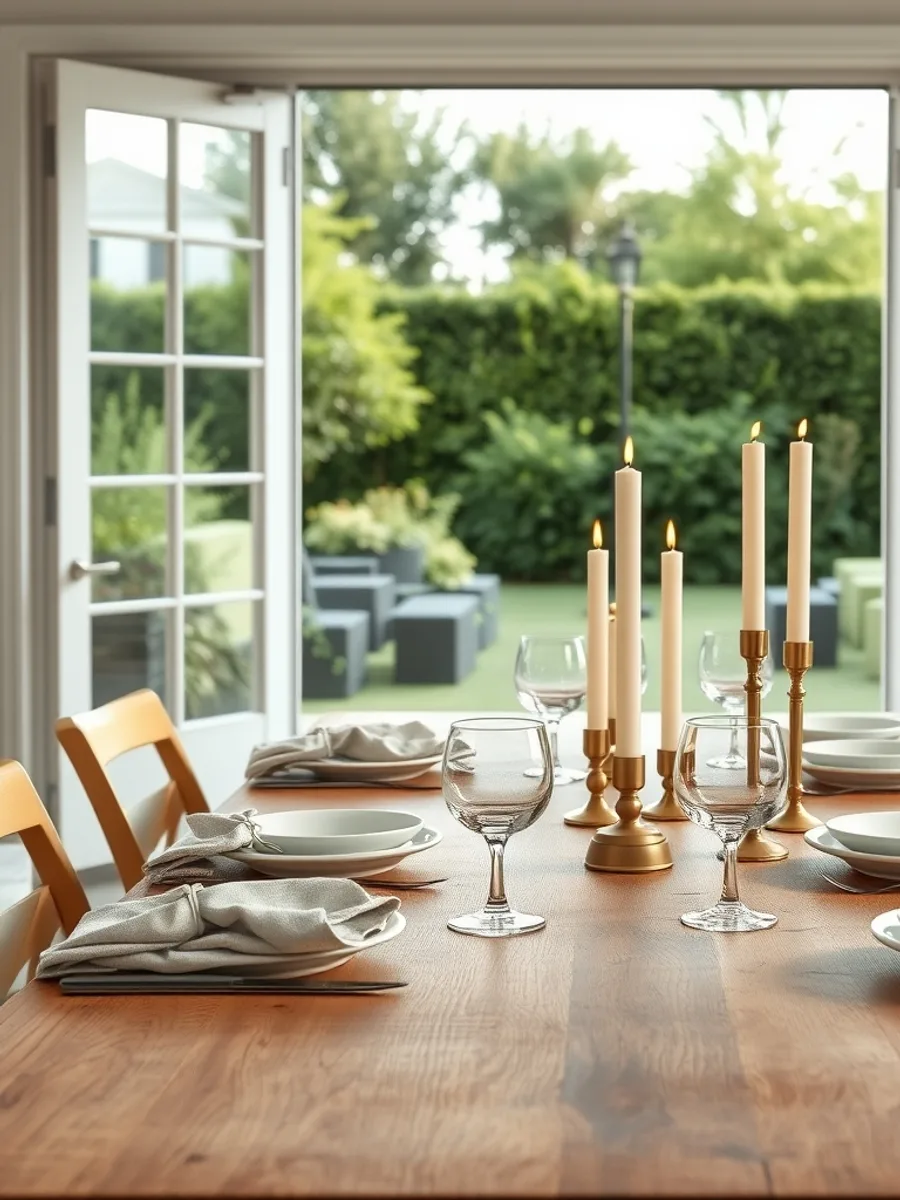
Casual hosting goes wrong in two directions. Either the table is set so formally that guests feel they should be careful, or it is not set at all and everyone spends the first ten minutes looking for a fork. The middle ground is a table that is obviously ready for people, without asking anything of them.
This post contains affiliate links. If you buy through them, we may earn a commission at no extra cost to you. Read our Affiliate Disclosure.
Decide the menu before you touch the table
The table follows the food. A single-bowl meal — a stew, a big pasta, a sheet-pan dinner — needs one bowl, one spoon, a glass and bread. A meal with a first course and a shared centerpiece needs a small plate, a large plate and more room between settings.
We would rather serve one generous course and a dessert than three courses that require the table to be cleared and reset while guests sit holding their glasses. Fewer courses also means fewer dishes, which is the difference between hosting being pleasant and being a shift.
Once the menu is fixed, count the actual items each guest needs to touch. If the answer is more than five, simplify. This is not austerity; it is the reason a well-run casual dinner feels easy.
The place setting, stripped back
A casual setting needs five things: a plate, a fork, a knife, a glass, and a napkin. The fork goes on the left, the knife on the right with the blade facing the plate, and the glass above the knife. That is the whole grammar of it.
Two details improve the look without adding fuss. First, leave a hand's width between settings — around 24 inches of table edge per person is comfortable, and 20 inches is tight but workable. Second, put the napkin to the left of the fork or on the plate, not folded into a fan; a flat napkin in a plain color reads calmer.
Where the glass goes
Above the knife, slightly to the right, is the conventional position, and it is conventional because it keeps the glass out of the way of the serving dishes. If you are serving wine, one glass per person is enough for a casual dinner. Two glasses at every setting doubles the dishes to wash and takes table space that a shared water pitcher would use better.
If the table is small, put the water in a pitcher in the middle and let people help themselves. Passing a pitcher around is more sociable than a water glass at every setting, and it removes a whole category of spill risk.
The middle of the table
The center of the table should hold food, not decoration. A low bowl of flowers is fine if it does not block sightlines; anything taller than about 12 inches will have guests leaning sideways to talk.
For a casual dinner, we would put one large serving dish in the middle, a pitcher of water, salt, and a small bowl for scraps or wrappers. Bread in a basket, if there is bread. Candles if it will be dark by the time you eat, and unscented ones, because scented candles compete with the food.
Everything else — sauces, extra napkins, the bottle opener, a second serving spoon — goes on a sideboard or a clear stretch of counter within reach of the table, not crowded onto it. This is where counter organization pays off even when you are not cooking.
Seating, sightlines and the small-room problem
A round table seats more people comfortably than a rectangular one of the same width, because everyone can see everyone. A 48-inch round table will seat four with room for serving dishes, and six if the dishes move to the side. Rectangular tables need roughly 24 inches of width per person along each side.
If the room is small, push the table against a wall for everyday use and pull it out for guests. Keep the chairs light enough to move with one hand, and keep a folding chair or two in a closet if you host more than four. Nothing makes a table feel crowded faster than chairs that do not tuck in.
Light matters as much as layout. A single overhead light directly above the table throws shadows under every chin; a pendant slightly lower and a lamp or two in the corners is far more flattering. Our guide to layered lighting covers the switching, and the table itself will look better under a dimmer than under a brighter bulb.
For a relaxed table, the pieces that earn their place tend to be plain and washable.
| Product | Best for | What to know |
|---|---|---|
| Washed linen napkins | Everyday hosting and guests | Softens a plain table instantly; needs ironing or a deliberate crumple, and improves with washing |
| Large stoneware platter | Shared centerpieces | Big enough to serve from at the table; check it fits the oven and the cabinet before buying |
| Glass water carafe with tumblers | Small tables and self-service | Removes a glass per setting and looks better than mismatched bottles; glass is heavy when full |
| Unscented taper candles | Evening meals | Warms the room cheaply; keep holders stable and never let tapers burn near a draft |
| Simple cotton tablecloth | Hiding a tired tabletop | Easier than refinishing a table; needs a hot wash and will shrink in a hot dryer |
Practical versions of the first four: washed linen napkins in a set of six, a large oval stoneware platter, a glass water carafe with matching tumblers, and unscented beeswax taper candles. Our everyday dinnerware guide explains why a plain stoneware plate works for both a Tuesday and a table of eight.
FAQ
How many people can a small dining table seat?
A 48-inch round table seats four comfortably and six if serving dishes move off the table. A 60-inch rectangular table seats six along the long sides. Allow about 24 inches of edge per person and check that chairs can pull out without hitting a wall.
Do I need a full flatware set for a casual dinner?
No. One fork and one knife per person plus a spoon for dessert covers almost every casual menu. Adding a second fork for an appetizer is only worth it if you are genuinely serving a separate first course; otherwise it is one more thing to wash.
Should napkins be cloth or paper?
Cloth for a dinner where people sit for an hour or more, paper for anything involving children or a garden. Washed linen is the most forgiving cloth option because it does not need ironing to look intentional, and it gets softer with each wash. Wash linen hot and skip the dryer if you want it to last.