Countertop Organization: What to Keep Out
What deserves permanent counter space, what should go back in a drawer, and how to judge the appliances that quietly take over a small kitchen.
A clear counter is not a decorative preference. It is the difference between chopping an onion in two minutes and clearing a space for the board first. Most countertops are lost slowly, one small object at a time, until there is nowhere to put a hot pan down. Keeping a surface usable takes a rule rather than a mood.
This post contains affiliate links. If you buy through them, we may earn a commission at no extra cost to you. Read our Affiliate Disclosure.
The counter is a work surface, not a shelf
A standard base cabinet gives you about 24 inches of depth, but the counter you actually work on is the front 15 inches or so. Everything stored permanently on the counter reduces that strip. A knife block, a crock, a coffee machine and a dish rack can easily consume half the usable depth of a six-foot run, and none of them look like clutter individually.
We use a simple measure: stand at your main prep spot and stretch your arms forward. Whatever you can reach without leaning is the working zone. If that zone is occupied by appliances, the counter is being used as furniture.
The fix is not minimalism for its own sake. It is deciding, once, which objects are used often enough to justify permanent floor space — and moving the rest to storage that is genuinely easy to open. If the alternative to the counter is a cabinet you dread opening, the object will migrate back within two weeks. That is why the ideas in our small kitchen storage guide begin with access, not with matching containers.
What earns a permanent place
Only three categories reliably deserve to stay out: things used several times a day, things too heavy or hot to move safely, and things that need to be visible to be used.
The four-item test
Before an object stays on the counter, ask four questions. Is it used most days? Does it need to be plugged in or plumbed? Would moving it make the work harder rather than slower? And does it have a defined home that is not "here"? Anything that answers no to all four belongs in a drawer.
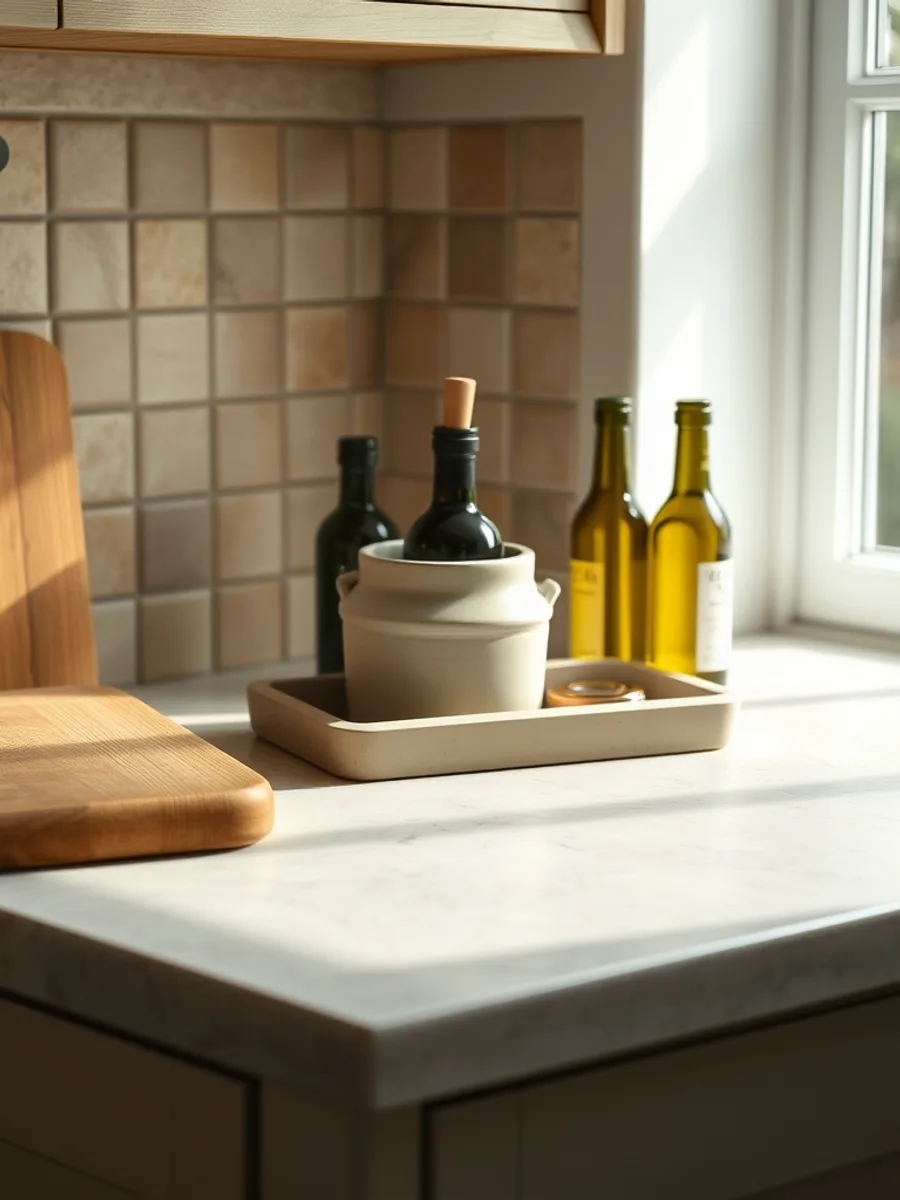
In practice, that leaves a short list: a board, a knife or two, a crock for the utensils you actually cook with, salt and the oil you reach for constantly, and one appliance you use daily. A kettle usually qualifies. A stand mixer usually does not, unless you bake weekly, in which case a corner with clearance above it is a fair trade for the space it takes.
Everything else is negotiable. The bread box, the fruit bowl, the coffee grinder, the second crock of "good" utensils: each is a decision, and each should be made deliberately rather than inherited.
The appliance question
Counter appliances are the largest single source of visual weight in a kitchen, and the hardest to argue about because each one is genuinely useful. We would judge them on three things: how often they are used, how heavy they are to lift, and whether they have a home within two steps.
A toaster used every morning that weighs little and lives beside the kettle is fine. A food processor used twice a month and stored on a high shelf is not fine on the counter, because the shelf is the reason it is there. The honest answer for most households is to keep the two appliances that appear daily and find cabinet space for the rest, accepting that the cabinet needs to be at waist height or the appliance will drift back out.
There is a second cost that rarely gets counted: cleaning. Every object on a counter is an object you lift, wipe under and put back. A counter with six items takes noticeably longer to clean than one with two, and the grease that collects behind a coffee machine is the kind of thing people notice only when they move out.
One practical compromise is a single tray or board that groups the small items — oils, salt, a spoon rest — so they can be lifted and wiped around as one unit. It looks intentional, and it makes the weekly clean take seconds rather than minutes.
What to check before you clear the counter
- Does this object have a home that is easier to reach than leaving it out?
- Is it used at least four times a week?
- Would moving it mean lifting something heavy or hot?
- Does it block the light over the main prep area?
- Can it be stored without damaging it — knives need protection, cast iron needs air?
- Is there a drawer or shelf that will not become a graveyard for it?
Useful pieces for the ones that stay: a stoneware utensil crock with a wide base that will not tip when loaded, a small ceramic tray for oils and salt so the group can be moved in one hand, a wall-mounted paper towel holder to free the counter edge, and a magnetic knife strip if your wall is close enough to the prep zone to be useful.
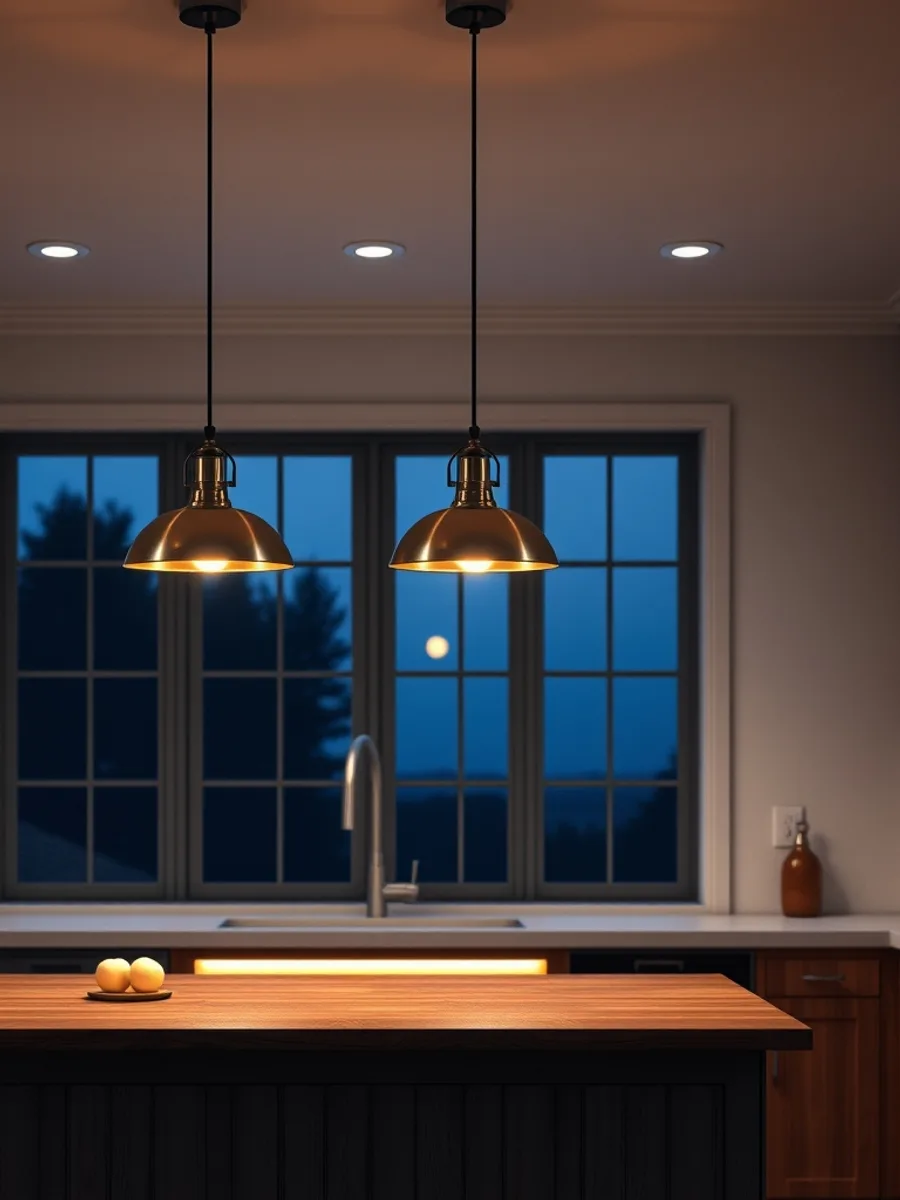
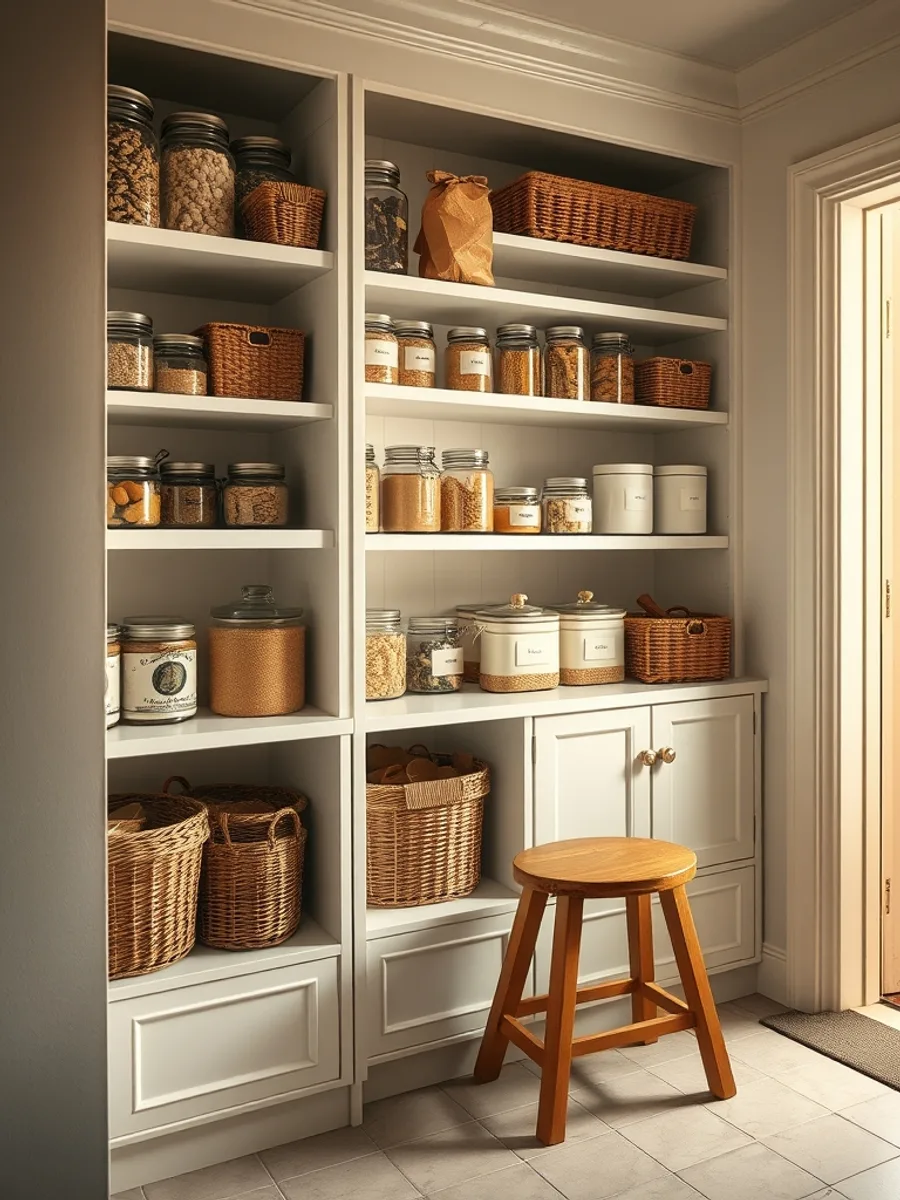
None of these solves the underlying question, which is how much you want on display. Under-cabinet light helps more than people expect: a lit work surface makes a busy counter look deliberate rather than crowded, and it is the cheapest improvement in our kitchen lighting layout guide. If the real problem is that there is nowhere to put things away, start with pantry organization instead of buying another rack.
FAQ
How much counter space should stay empty?
Enough for a chopping board plus a little room to move ingredients. On a typical 24-inch deep counter that means clearing roughly the front half of one work zone, usually two to three feet of run. Fewer permanent items is almost always the faster fix.
Should a coffee machine stay on the counter?
Yes if you use it daily and it has clearance above for the lid or hopper to open. No if filling it means pulling it forward every time, because that is a sign it is in the wrong place. A machine that needs two hands and a step back is better on a low shelf beside the outlet.
Where do people usually go wrong?
Buying storage before clearing. A new rack or turntable will simply hold the same objects and add one more thing to wipe. Empty the counter completely, live with it for a week, and let the objects that you genuinely miss tell you what belongs there.