A Budget Kitchen Renovation: Where the Money Actually Goes
A kitchen budget is eaten by plumbing, electrical, and square walls, not by finishes. Here is the order to spend in, and what to skip.
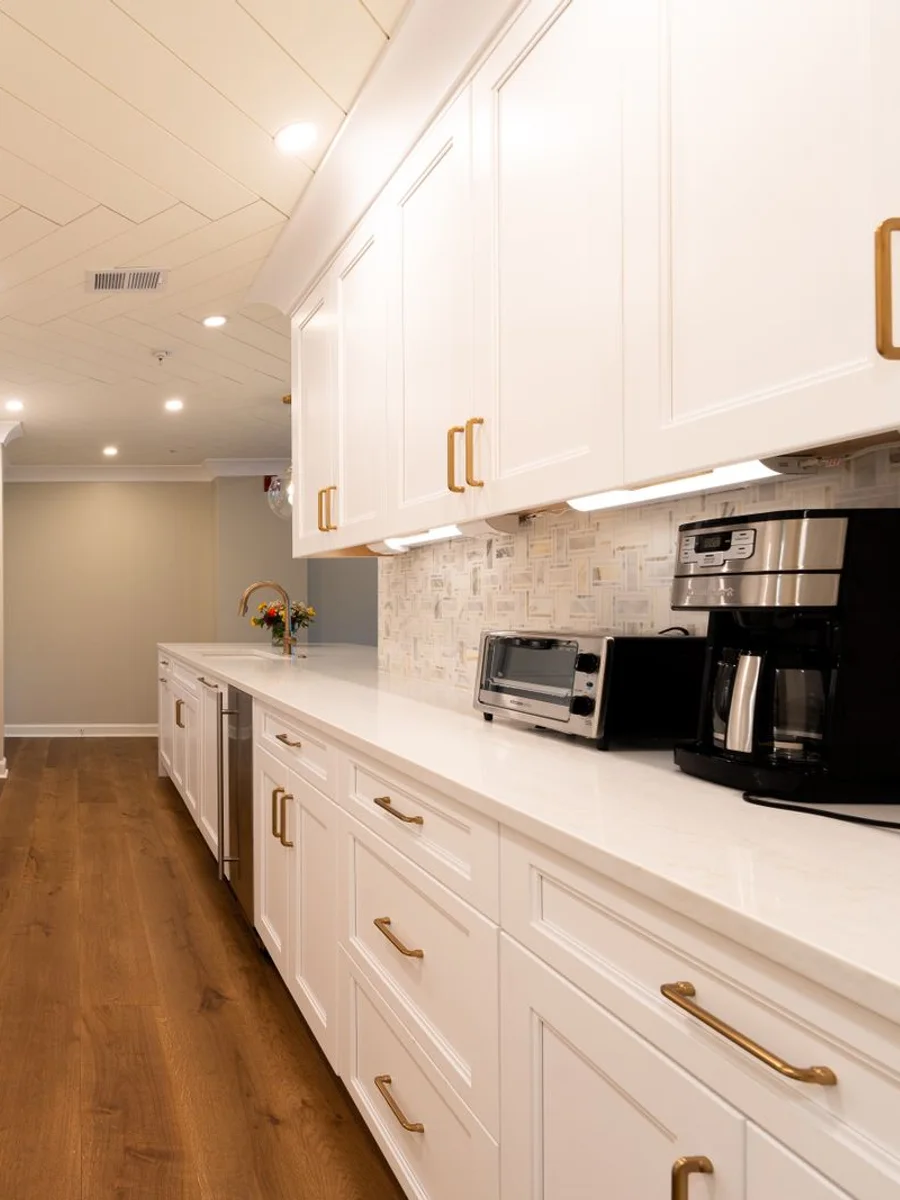
Kitchens swallow money in places that never appear in the finished photographs: plumbing moved six inches, a circuit added for a microwave, a wall that turns out not to be square. A budget survives when it is set by category, written down, and defended in order, rather than assembled by walking through a showroom and saying yes.
This post contains affiliate links. If you buy through them, we may earn a commission at no extra cost to you. Read our Affiliate Disclosure.
Set the budget by category, then spend in order
Spend from the inside out. Structure, plumbing, and electrical come first, because they are the only parts you cannot add later without opening a wall. Cabinets and counters come next, since they set the dimensions everything else lives with. Finishes come last, because they are the easiest to change and the easiest to overspend on.
A workable rule of thumb used by contractors is roughly a quarter to a third of the budget on cabinets, a similar share on labor, 10 to 15 percent on countertops, around 15 percent on appliances, 10 percent on lighting, flooring, and backsplash, and 10 to 15 percent held back as contingency. Those shares shift with the room, but they are a useful check: if a quote puts half the budget into a range, something else is being starved.
Write the scope down before you get quotes. A scope that says "replace cabinet doors and hardware, keep boxes, new laminate counters, new sink and faucet, add under-cabinet lighting" gets comparable bids. "Redo the kitchen" gets three numbers that mean three different jobs.
Keeping the layout is the single biggest saving
Moving a sink means moving the drain, the supply lines, and often the vent stack. Moving a range means a new gas line or a dedicated 240-volt circuit, plus venting if the hood goes with it. Each move drags drywall repair, inspection, and permit fees behind it, and none of that shows in the finished room.
If the layout genuinely does not work, spend there deliberately and save elsewhere. A kitchen with a bad work triangle will annoy you every day; a kitchen with laminate instead of quartz will not. Our guide to small kitchen storage ideas covers layouts that gain usable storage without moving plumbing.
Watch the soffit. Dropping a cabinet to the ceiling often means removing a soffit that hides ducts or wiring, which turns a cabinet purchase into a mechanical project.
Cabinets: reface, paint, or replace
If the boxes are square, dry, and the layout is right, keep them. Refacing replaces the doors and drawer fronts, applies a new veneer to the exposed sides, and adds hardware, while the boxes stay in place. It is usually the cheapest route to a radically different kitchen, and it keeps the room usable while it happens.
Painting is cheaper still and entirely reasonable on solid wood or MDF doors with a factory-smooth finish. The result depends almost completely on prep: degrease, degloss, sand, prime with a bonding primer, then two thin topcoats. Doors need to come off and dry flat, and the kitchen should stay out of heavy use for a week while the paint cures. A rushed paint job on greasy cabinets peels within a year.
What refacing does not fix
Refacing leaves the interior exactly as it was: shallow shelves, builder-grade drawer boxes that pull out two-thirds of the way, and no soft-close unless the hinges are replaced too. If the boxes are swollen from a past leak, out of square, or arranged in a way that wastes the room, new cabinets are the honest answer.
Replace when water damage has reached the boxes, when you need full-extension drawers, or when the layout is the problem. Otherwise, put the difference into the counter and the lighting.
Where to spend on counters, sink, and the things you touch
The counter and the sink are where hands land a hundred times a day, so this is the right place to stop saving. Laminate has improved enormously and, with tight seams and a squared edge, reads as a deliberate choice rather than a compromise. Butcher block is warm and repairable but needs oiling every few months. Quartz is the low-maintenance option; solid surface can be sanded and rejoined.
Spend on the faucet rather than the sink basin. A mid-priced stainless sink with a good faucet outperforms a designer sink with a bargain faucet, and the faucet is the part that fails first. Check the spout reach against the sink's depth so the water lands in the basin rather than on the rim.
Save on the backsplash. A 4-inch lip in the counter material, or a slab remnant, costs a fraction of a tiled wall and looks intentional. If you do tile, choose a simple shape in a standard size; mosaic sheets are slower to install and less forgiving of an uneven wall.
Lighting and outlets are cheap now and expensive later
Under-cabinet lighting is the highest-return electrical item in a kitchen and the easiest to add while the walls are open. Hardwired LED strips with a dimmer cost little in materials and remove the shadow you currently cook in every evening. Plug-in versions are a fine retrofit if the walls are staying closed.
Count the outlets before the drywall goes back up. Small appliances accumulate: kettle, coffee grinder, toaster, mixer, and a charger. Two circuits on the counter run, plus a dedicated circuit for the microwave, prevents the breaker tripping every time someone reheats soup while the kettle boils. Our kitchen lighting layout guide covers where the layers should sit.
Hold back a contingency and a written change order
Keep 10 to 15 percent of the budget unspent. In an older house, the odds are good that something behind the wall costs money: a rotted subfloor, aluminum wiring, a drain that does not slope. A contingency is not pessimism; it is the difference between finishing the kitchen and stopping halfway with the cabinets in the garage.
Every change after work starts should be written down with a price before it happens. Verbal "while you're in there" requests are how a fixed-price job becomes an open-ended one.
| Product | Best for | What to know |
|---|---|---|
| Cabinet refacing kit with new doors | Sound boxes and a layout that works | Interior storage stays as it is; check hinge replacement for soft-close |
| Laminate counter with squared edge | Tight budgets and busy kitchens | Tight seams matter more than thickness; skip the glossy finish |
| Butcher block counter | Renters and DIY installs | Needs oiling every few months; never leave standing water |
| Undermount stainless sink and faucet | Daily washing | Spend on the faucet; check spout reach against basin depth |
| Hardwired LED under-cabinet strip | Any kitchen with open walls | Add a dimmer while the circuit is accessible |
A realistic package for a budget renovation is a cabinet refacing kit with new doors and drawer fronts, an undermount stainless kitchen sink, a pull-down kitchen faucet, and a hardwired LED under-cabinet light strip. Prices on all four move a great deal, so check the current price before you commit the budget.
If the room is small, the storage planning in our kitchen counter organization notes will save more money than any finish choice, because they stop you buying a cabinet you did not need. When the work is done, how to clean wood furniture covers the care routine for butcher block and painted cabinetry.
FAQ
Is refacing cabinets cheaper than replacing them?
Yes, usually by a wide margin, because the boxes and the installation labor stay. It only makes sense when the boxes are square and dry and the layout already works. If a leak has swollen the boxes or the drawers only open two-thirds of the way, refacing spends money on a cabinet that is still the wrong cabinet.
What is the cheapest countertop that still holds up?
Laminate, by a clear margin, and modern laminate is far more water-resistant than the version people remember from the 1990s. Butcher block is comparably cheap in materials but needs regular oiling. For a rental or a flip, laminate with a squared edge and tight seams is the sensible default.
How much contingency should a kitchen renovation carry?
Plan on 10 to 15 percent of the total, and do not treat it as spare money for an upgraded range. In an older house the first place it goes is whatever is behind the wall. If the plumbing and wiring are already known to be sound, the lower end of that range is reasonable.