Styling a Coffee Table: Books, Trays, and What to Leave Out
A coffee table has to hold a cup, a remote, and your feet without looking abandoned. Books and a tray do most of the work; the rest is restraint.
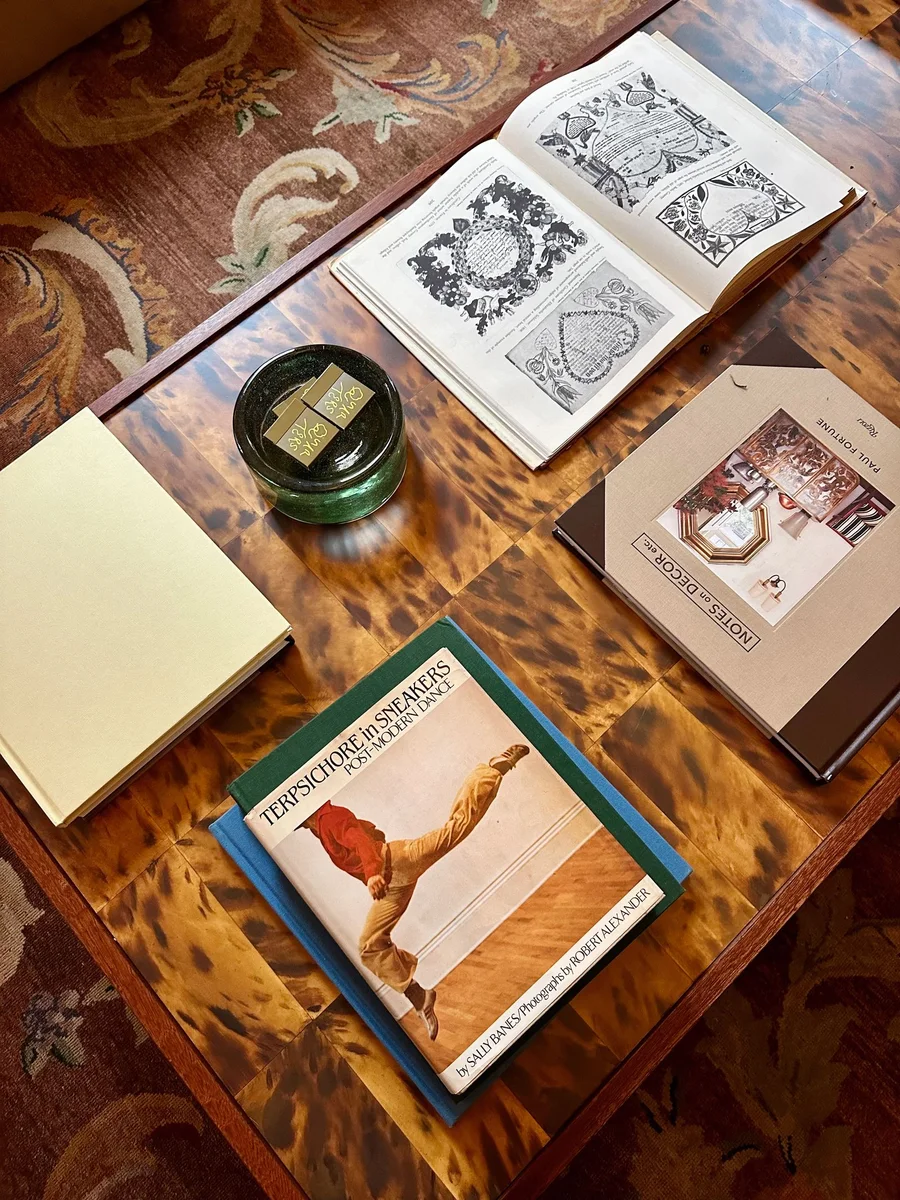
A coffee table is the most-looked-at horizontal surface in a living room and the easiest place in the house to collect clutter. Styling goes wrong in two directions: a bare table that reads like a showroom, or an arrangement with no clear space left for a cup. Decide what the table has to do before you decide what sits on it.
This post contains affiliate links. If you buy through them, we may earn a commission at no extra cost to you. Read our Affiliate Disclosure.
Decide what the table is for
Start with clearance. A 48-inch table needs roughly a third of its surface left empty, and that empty third should be the side facing the sofa, where hands actually arrive. If the table holds feet, homework, or board games, anything fragile belongs at the far end or nowhere at all.
The table's height sets the scale of everything on it. Most coffee tables sit 16 to 18 inches off the floor, and a sofa seat is about the same. An object under 6 inches tall disappears when you are seated; an object over 18 inches tall blocks the sightline across the room. The usable window is narrow, which is why so many arrangements look either sparse or fussy. If you are still deciding on the table itself, our guide to choosing a coffee table covers height, depth, and the walkway you need around it.
Books give the table structure
Hardcovers, not paperbacks. A coffee table book is a format before it is a subject: large trim size, heavy paper, a binding that opens flat enough to dip into. Two or three of them stacked with the largest at the bottom create a base that stabilizes whatever sits on top and gives the eye somewhere to land.
Alignment does more than the titles do. Square the stack to the table edge rather than the room, and keep the spines facing the seat so the titles are readable from where people sit. A stack that exceeds about a third of the table's width starts to look like a storage problem rather than a composition.
Choose one book you actually open and one that is mostly surface. If nothing in the stack is something you would read on a rainy afternoon, the stack will read as a prop, and guests can tell. Library-sale hardcovers and remaindered art books work as well as new ones; condition matters less than scale.
How many books is too many
One stack on a small table, two on a large one, and neither stack taller than about eight inches. Beyond that, the books stop being a riser and start being a wall. If you have two stacks, keep them unequal in height and place them off-center so the table has a long side and a short side rather than a bullseye.
A tray keeps the small things together
A tray turns four small objects into one object, which is the whole trick. The remote, the coasters, a candle, and a pair of reading glasses read as clutter when they are scattered and as a collection when they are contained.
Look for a rim of half an inch to an inch so coins and a spilled glass stay put, and a base with felt or cork feet so the tray does not scratch the finish when it is moved. Contrast the shapes: a round tray on a rectangular table, a rectangular tray on a round one. A tray should take up no more than a third of the top, or it becomes the table.
Wood, lacquer, and stone all work. Metal shows water spots, and untreated wood rings, so a sealed finish is worth checking before you buy. If children use the room, a tray with a soft lining is quieter and less likely to chip.
Height, scale, and the empty third
Three objects of different heights read better than three of the same height, and one of them should be tall: a branch in a narrow vase, a single stem, a candlestick. That tall element does the work of a focal point without adding width, which is what a small table needs.
Keep the group tight. Objects spread to the four corners of a coffee table make it look larger than it is and emptier than it is. Push the arrangement toward the center, leave the sofa edge clear, and resist filling the space with a second tray of things.
Rotate rather than add. A bowl that moves to the shelf for a month and comes back reads as new again; a fourth object bought to refresh the table usually just crowds the third. Our notes on styling open shelves apply the same logic to vertical space, where the temptation to fill every gap is stronger.
What to leave out
What to check before you buy:
- Tabletop area. Measure the top and keep at least a third of it clear; a 36-inch round table holds less than a 48-inch rectangle.
- Tray rim and base. Half an inch to an inch of rim, felt or cork underneath, no sharp corners at knee height.
- Book scale. Oversized hardcovers 10 by 12 inches or larger read as intentional; a paperback stack reads as a pile.
- Finish tolerance. Sealed wood, lacquer, or stone shed water; untreated wood and unglazed ceramic stain.
- Cords. A lamp or charging cable on a coffee table adds a trip hazard and a visual loose end; move both to a side table.
A workable starting set is an oversized hardcover art book as the base, a round wood tray with handles for the small things, and a low matte ceramic bowl to sit on the books. Add a set of stone coasters if the top is wood, and stop there.
FAQ
Should coffee table books be stacked or standing?
Stacked, in almost every case. A standing row needs bookends, blocks the sightline across the table, and hides the titles from anyone seated. Two or three stacked books also give you a stable platform for a bowl or candle, which a vertical row cannot do.
How do I style a coffee table in a small living room?
Keep it to one stack and one tray, and leave the edge nearest the sofa clear. In a tight room the table is also the walkway, so anything taller than 12 inches or wider than a third of the top will feel like an obstacle. Our guide to small living room layouts covers the clearance you need around the table itself.
Do you need a rug under a coffee table?
Not always, but a rug helps define the seating group and keeps the table from looking like it is floating. If you add one, make sure the front legs of the sofa sit on it and that the pile is low enough for the table to sit level. A pad underneath stops the rug from creeping when people push back from the table.