Fall Porch Decor Ideas You Can Reuse Next Year
Most fall porches are bought in one afternoon and binned in November. The pieces that come back next year are the ones that survive storage.
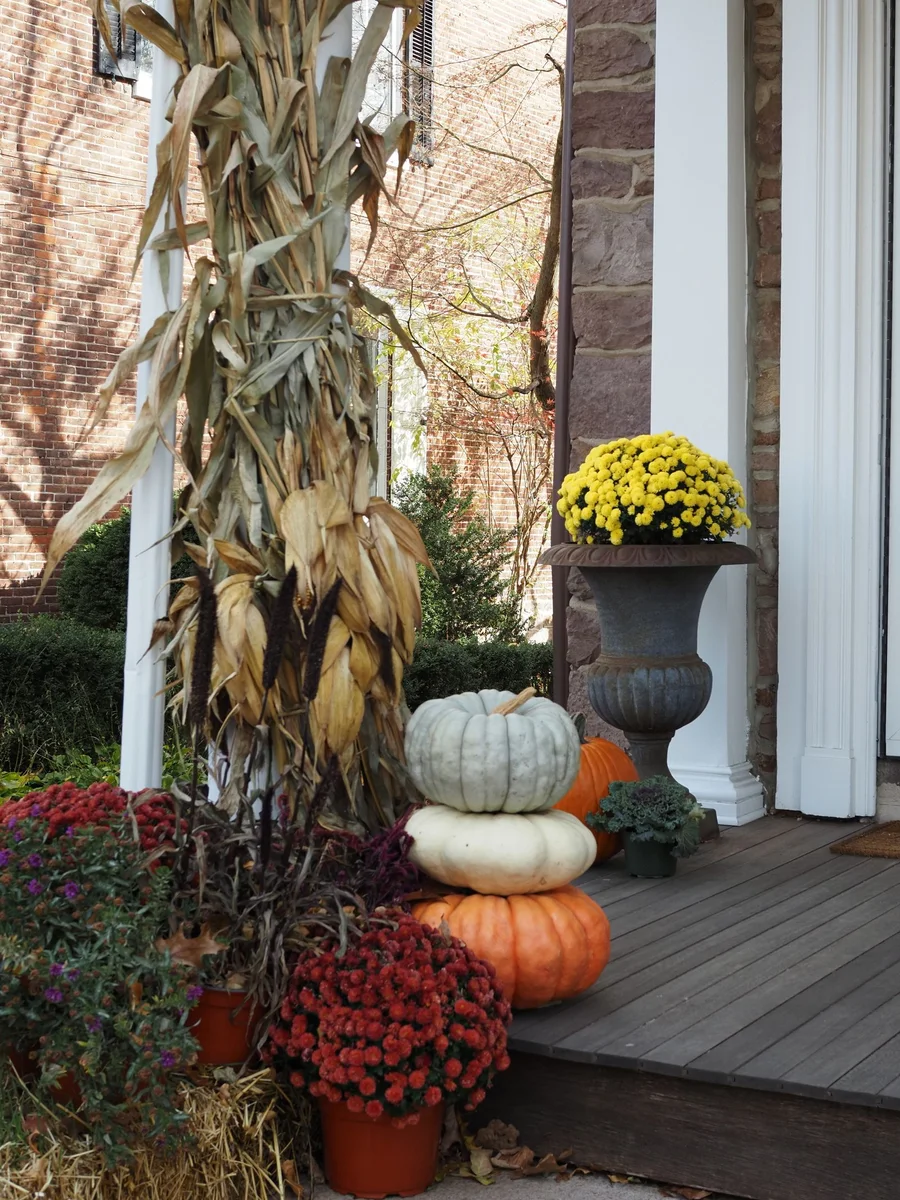
A fall porch is usually assembled in one afternoon and taken apart in November, which is why so much of it ends up in the trash. The difference between a display you repeat and one you replace is which parts are weatherproof and which are compost.
This post contains affiliate links. If you buy through them, we may earn a commission at no extra cost to you. Read our Affiliate Disclosure.
Separate the weatherproof from the compostable
Real pumpkins and gourds are the cheapest way to fill a porch and the least likely to come back. An uncarved pumpkin in cool, dry weather typically holds for six to ten weeks before it softens; carved ones go in days. A hard frost finishes the job. Thick-rinded heirloom varieties last noticeably longer than the thin-skinned carving pumpkins sold for jack-o'-lanterns, and they look better stacked.
Faux pumpkins are not automatically the reusable answer. Foam and molded plastic versions fade in direct sun and can warp in a hot attic, so they last longest on a covered porch with an overhang and should be stored somewhere cool and dry rather than above a garage. Buy them in a matte finish; the glossy ones read as plastic from the sidewalk.
Mums are similar. Florist mums are treated as annuals in most of the country and will not survive a hard freeze in a pot. Garden mums planted in the ground in early fall have a better chance of returning, especially in zones where the ground does not freeze deep. Either way, buy them in bud rather than full flower so you get more than two weeks of color.
Start at the door
The door is where the composition is read first, so put the money there. A coir mat in a 18 by 30 or 24 by 36 inch size covers the standing zone without swallowing the landing. Coir sheds and holds moisture, which is fine under a porch roof and less fine in constant rain; a rubber-backed mat is the more durable choice in a wet climate.
A wreath should span roughly two-thirds of the door's width. On a standard 36-inch door that means 22 to 24 inches, which is larger than most people buy. A grapevine or twig base can be rewired each year with dried grasses, seed pods, or a ribbon, which makes it the most reusable thing on the porch. Avoid anything with glued-on plastic berries; they drop off in the first cold snap.
Hanging a wreath without damaging the door
An over-the-door hook is the least invasive option, provided the door closes with the hook in place; check the clearance at the top before you hang anything. Suction cups work on glass storm doors until the temperature drops, then let go. Adhesive hooks will hold a light wreath but can lift paint when removed, so test one on the hinge side first.
Ribbon over the top of the door still works and costs nothing, but the ribbon fades and the wreath swings in wind. If the door is metal, a magnetic hook is the cleanest answer of all.
Steps and planters carry the layers
Group pots in threes and vary the sizes rather than lining up identical ones. A tall pot, a medium pot, and a low bowl of gourds at the base reads as one arrangement; five pots of the same size read as inventory. Put the heaviest pot at the bottom of the steps and fill it in place, because a 14-inch pot of soil is not something you want to carry up a flight.
Risers do the work that more decor cannot. A crate, a stump, or an overturned pot lifts a pumpkin to a second height and gives the group a silhouette. Keep at least 36 inches of clear width on the path, and check that nothing sits where a delivery driver will step.
Straw bales are popular and worth a warning: they are flammable, they mold after rain, and they attract pests. Under a roof, off the ground, and away from outlets, they are fine for a season. Wet and against the house, they are a problem.
Light for the early dark
By October the porch is dark before dinner in most of the country, and lighting is what makes the arrangement visible at all. Choose fixtures and string lights rated for wet locations, with a UL listing on the packaging, and run cords to a GFCI outlet rather than daisy-chaining three extension cords across a walkway.
Battery candles with built-in timers are the simplest option for steps and lanterns: no cord, no outlet, and they switch themselves on at dusk. Real candles on a porch with dried grasses and a wooden door are a bad combination.
Our guide to outdoor string lights covers warm color temperature and how to hang a run without sagging. For the pots themselves, the size and drainage notes in our container planters guide matter more in fall than in summer, when wet soil and cold roots do the damage.
Store it so it earns a second year
Storage is where reusable decor is won or lost. Brush the mat, let it dry flat, and roll rather than fold it. Wrap the wreath in tissue and box it so the vine does not crush. Coil lights loosely around a cardboard tube instead of stuffing them in a bag, and label the bin by room rather than by season so you can find it next October.
Faux pumpkins should go in a rigid bin in a cool, dry place, not a hot attic and not a damp basement. Keep a desiccant packet in with anything fabric. If you have room, photograph the porch once it is styled; the photo is the fastest way to rebuild the arrangement next year without buying anything new.
What to check before you buy:
- Weather rating. Outdoor-rated lights and mats, UV-stable finishes on anything that stays in sun.
- Storage footprint. Collapsible bins and wreath boxes cost less space than the decor they protect.
- Attachment method. Over-the-door hooks and magnetic hooks leave no holes; adhesive hooks can lift paint.
- Real versus faux. Real pumpkins compost in weeks; faux ones need somewhere cool and dry to live for eleven months.
- Path clearance. Keep 36 inches clear on steps and landings, and nothing within reach of a railing grip.
A reusable core is a coir doormat in a 24 by 36 size, a grapevine wreath base, a set of battery operated candle lanterns with timers, and a lidded storage bin for seasonal decor. Everything else can be gourds from a farm stand.
If the entry needs more than a mat and a wreath, the entryway makeover ideas cover hooks, lighting, and the drop zone just inside the door. And if you like changing the porch twice a year, the seasonal decor refresh approach keeps the base layers constant and swaps only the top layer.
FAQ
How long do real pumpkins last on a porch?
An uncarved pumpkin in cool, dry, shaded conditions usually holds six to ten weeks. Direct sun, rain, and warm spells shorten that considerably, and a hard frost ends it. Carved pumpkins typically last a few days to a week before collapsing, so carve close to when you want them seen.
Can faux pumpkins stay outside all season?
Yes, if they are under a porch roof and out of direct sun. Foam and plastic versions fade with UV exposure and can warp in heat, so keep them shaded and bring them in during extreme temperature swings. Stored cool and dry, a good faux pumpkin can return for several years.
How do I keep a wreath from fading?
Hang it out of direct sun, which usually means under an overhang or on a north-facing door, and avoid glued plastic accents that bleach first. Natural grapevine and dried grasses fade gracefully; ribbon and faux flowers do not. Bring the wreath in during storms rather than letting it soak.